| Key stat: According to RANKMETRY 60% to 64.8% of all Google searches in 2026 end without a single click to any external website. For queries that trigger AI Overviews, that figure rises to 83%. |
What Is an Answer Engine?
An answer engine is a system that responds to a user query with a direct, complete answer rather than a list of links to external websites where the answer might be found.
Answer engines come in three main forms:
- AI chatbots (generative answer engines): ChatGPT, Google Gemini, Claude, and Perplexity. These use large language models (LLMs) to synthesise answers from vast training data and, increasingly, live web retrieval.
- Voice assistants: Amazon Alexa, Apple Siri, and Google Assistant. These platforms read answers aloud, pulling primarily from featured snippets and structured data sources.
- Knowledge and database engines: WolframAlpha and similar tools that query structured databases to return precise, data driven answers verbatim.
Even Google’s traditional search results page has become an answer engine in many respects. AI Overviews, featured snippets, knowledge panels, People Also Ask (PAA) boxes, and direct answer boxes all deliver answers without requiring a click to any third party website.
Answer Engine vs. Search Engine: Key Differences
The fundamental distinction between a search engine and an answer engine is what each delivers in response to a query.
A traditional search engine such as Google or Bing in their classic form crawls and indexes the web, then returns a ranked list of links to pages it considers most relevant. The user must click through to one or more of those pages to actually find the answer they need.
An answer engine skips that step entirely. It understands the intent behind the query and delivers the answer directly within its own interface. The user never has to leave.
Answer Engine vs. Search Engine At a Glance
| Feature | Search Engine | Answer Engine |
|---|---|---|
| Primary output | List of ranked links | Direct synthesized answer |
| User action required | Click through to website | None answer is on-page |
| Query style | 2 to 5 keyword phrases | Full conversational questions |
| Examples | Google (traditional), Bing | ChatGPT, Perplexity, Google AI Overviews |
| Content format | Ranked blue-link pages | Summaries, snippets, spoken replies |
| Traffic impact | Sends users to websites | Retains users on-platform |
| Optimise with | Traditional SEO (keywords, backlinks) | AEO (structured data, schema, FAQ) |
Another important difference is the type of input each system is designed for. Traditional search engines were built around short keyword phrases two to five words typed into a search box. Answer engines, especially AI driven ones, are designed for full conversational questions: “What is the best accounting software for a small business that invoices clients in multiple currencies?” The intent, context, and nuance in that sentence are all processed to generate a relevant, synthesised response.
The Four Types of Answer Engines
1: Large Language Model (LLM) Chatbots
Large language models are advanced AI systems trained on massive datasets of text from across the internet, books, academic papers, and other sources. They are the foundational technology that powers most modern answer engines. When you interact directly with a platform like ChatGPT, Claude, or Gemini as a standalone chatbot, you are using an LLM as an answer engine in its purest form.
LLM chatbots interpret your question, determine the most relevant information based on their training data, and synthesize a clear, conversational response often with inline citations when they are connected to live web search. They maintain context across multi-turn conversations, meaning they can follow up, clarify, and build on previous exchanges in ways that traditional search engines cannot.
What makes LLM chatbots distinct as answer engines is their generative capability. They are not simply retrieving a pre-written answer from a database; they are generating a new, tailored response based on the specific phrasing and context of your query. This makes them exceptionally powerful for complex, nuanced, or open-ended questions.
Key examples of LLM chatbot answer engines include:
- ChatGPT (OpenAI): the largest AI answer engine by market share, with over 400 million weekly active users and approximately 70% of the AI search market as of early 2025
- Claude (Anthropic): known for nuanced, context-aware responses and strong reasoning capabilities
- Gemini (Google): Google’s LLM, integrated across Google’s product suite
- Perplexity: an AI-native answer engine built around real-time web search and transparent source citations
For brands and content creators, LLM chatbots are arguably the most important type of answer engine to optimize for, given their massive and rapidly growing user base. Content that LLMs trust tends to be authoritative, clearly structured, factually precise, and well-cited
2: AI-Powered Voice Assistants
Voice assistants were among the earliest forms of answer engines, predating the current wave of LLM chatbots. They use a combination of voice recognition technology, natural language processing, and machine learning to interpret spoken queries and deliver spoken answers typically in a single, concise response without the user touching a screen.
When someone asks their smart speaker, “Alexa, what’s the weather in Lahore?” or tells Siri, “Find me a nearby pharmacy,” they are interacting with an answer engine that processes natural language, queries a data source or search index, and converts the response to speech using text-to-speech (TTS) technology.
The reach of voice assistants is substantial. Approximately 31.5% of internet users aged 16 and above used voice assistants on a weekly basis in 2024, and an estimated 153.5 million Americans were expected to use voice assistants by 2025. For people who prefer hands-free interaction while driving, cooking, or exercising voice assistants are frequently the first (and only) answer engine they consult.
Key examples of voice assistant answer engines include:
- Amazon Alexa embedded in Echo devices and a wide range of third-party smart home products
- Apple Siri integrated across iPhone, iPad, Mac, Apple Watch, and HomePod
- Google Assistant available on Android devices, Google Nest smart speakers, and other connected devices
Optimizing content for voice assistants requires a different approach than optimizing for text-based search. Voice answers are almost always drawn from a single source and read aloud in full, which means content must be highly concise, conversational in tone, and formatted to directly answer a specific question in one or two clear sentences. Structured data markup, FAQ schema, and well-organized “how-to” content are particularly effective for voice search visibility.
3: Search Integrated AI Overviews
The third type of answer engine sits within the familiar environment of a traditional search engine but adds a layer of AI-generated synthesis on top. Rather than replacing the search results page, these systems insert an AI-generated answer at the top of the page above the traditional blue links drawing from multiple web sources and presenting a consolidated response with citations.
Google AI Overviews (formerly Search Generative Experience, or SGE) is the most prominent example. When a user searches for a question on Google, AI Overviews synthesizes content from several high-ranking pages and displays a summary answer directly within the search results interface. The user gets the gist of the answer without clicking, while the cited sources gain brand visibility and a potential traffic pathway for users who want to read further.
Bing Copilot operates on a similar principle, integrating AI-generated answers into Microsoft’s Bing search experience. Powered by OpenAI’s GPT models, Copilot blends traditional ranking signals with AI reasoning to deliver concise, sourced responses alongside or within search results. Given Microsoft’s integration of Copilot across Windows, Edge, and Microsoft 365, this answer engine has significant reach across enterprise and consumer audiences.
Key examples of search-integrated AI overviews include:
- Google AI Overviews appearing in approximately 50% of US search queries, prioritizing structured, authoritative content
- Google AI Mode a newer, fully conversational search experience within Google where AI-driven answers take center stage
- Bing Copilot Microsoft’s AI search layer embedded across the Bing and Microsoft ecosystem
A study found that 46% of Google AI Overview citations come from the top 10 organic search results, meaning that strong traditional SEO performance significantly increases the likelihood of being included in AI Overviews. Schema markup, clear entity definitions, and well-structured content are all key factors in earning a citation in this type of answer engine.
4: Computational and Database Answer Engines
The fourth type of answer engine predates the current AI wave entirely and operates on a fundamentally different principle. Rather than using generative AI to synthesize a response from multiple sources, computational answer engines query structured databases or perform direct calculations to return a precise, factual answer.
WolframAlpha, founded in 2009, is the defining example of this category. It was one of the first mainstream answer engines and remains one of the most respected. When a user asks WolframAlpha a question in mathematics, chemistry, physics, history, or economics, it does not generate an answer it computes or retrieves one directly from its curated knowledge base and presents it with full precision.
This type of answer engine is uniquely suited to queries that have a single, objectively correct answer: “What is the derivative of x squared?”, “How far is Lahore from Dubai?”, or “What was the GDP of Pakistan in 2023?” For these questions, a generative AI that synthesizes from multiple sources could introduce inaccuracy. A computational answer engine retrieves the verified fact directly.
Key examples of computational and database answer engines include:
- WolframAlpha computational knowledge engine covering mathematics, science, data, and more
- Google Knowledge Panel the structured data box that appears for well-known entities (people, places, organizations, products) in Google Search
- Google’s Rich Answer features direct database-drawn answers for queries like conversions, definitions, sports scores, and weather
While this category is less prominent in the current AI conversation, it plays an important role for businesses and organizations with structured, verifiable data assets. Ensuring your entity data is present in structured knowledge bases, Wikipedia, and Wikidata increases the likelihood of being surfaced by computational answer engines and knowledge panels.
Comparing the Four Types at a Glance
| Type | Key Examples | Best For | Content Optimization Tip |
| LLM Chatbots | ChatGPT, Claude, Gemini, Perplexity | Complex, open-ended, multi-turn queries | Structured, citable, authoritative content with clear entity definitions |
| Voice Assistants | Alexa, Siri, Google Assistant | Hands-free, location-based, quick factual queries | Concise Q&A format, conversational language, FAQ schema |
| Search-Integrated AI Overviews | Google AI Overviews, Bing Copilot, Google AI Mode | Mid-complexity queries within search interfaces | Strong organic SEO + structured data + entity clarity |
| Computational / Database | WolframAlpha, Google Knowledge Panel, Rich Answers | Precise factual, mathematical, or data-driven queries | Structured data markup, knowledge base presence, Wikidata |
Zero Click Search: When the Results Page Becomes the Destination
Zero click search describes any search session that ends without the user clicking through to any external website. The user’s query is fully resolved on the search results page itself through a featured snippet, knowledge panel, AI Overview, People Also Ask expansion, local pack, or direct answer box.
This is not a fringe phenomenon. Roughly 60% of Google searches end without a click. On mobile devices where most searches occur the zero click rate climbs even higher, estimated above 77%. Searches that trigger Google’s AI Overviews show a zero click rate of approximately 83%.(RANKMETRY)
| “The search results page is no longer a gateway, it is the destination.” Limor Barenholtz, Similarweb (May 2025) |
Zero click search has been growing for years, driven first by knowledge panels and featured snippets, and more recently by AI Overviews powered by Google’s Gemini model. As of early 2026, AI Overviews appear in approximately 16% to 30% of U.S. desktop search queries and are expanding rapidly across informational, local, and comparison based searches.
What Types of Queries Generate Zero Click Results?
Not all queries behave equally. Informational queries, definitions, how to, calculations, facts, comparisons are most likely to resolve on the SERP without a click. Examples include:
- “What is the capital of France?” answered by a knowledge panel
- “15 USD to GBP” answered by a live currency converter in the SERP
- “When is the next leap year?” resolved with a direct answer box
- “How does photosynthesis work?” answered by an AI Overview
Transactional and commercial queries where a user wants to compare products, request a quote, or make a purchase still drive meaningful click through traffic because the user must visit a website to complete the action.
The Business Impact of Zero-Click Search
For businesses and publishers that relied on informational content to drive organic traffic, zero click search is a structural challenge. Organic click-through rates for position one results have dropped by up to 58% for queries featuring AI Overviews, according to Ahrefs research from December 2025.
However, the users who do click after reading an AI Overview tend to be significantly higher intent. They have already consumed a summary and are seeking deeper information making them better prospects than cold organic visitors from traditional search.
The implication for brands is clear: optimising for visibility inside the SERP experience rather than solely for clicks has become as important as traditional ranking.
How Answer Engines Work: Synthesizing Content
Answer engines (like Perplexity, Gemini, and ChatGPT) use Retrieval Augmented Generation (RAG) to provide direct answers, rather than just lists of links. They analyze user intent using Natural Language Processing (NLP), search, retrieve specific information from trusted web sources, and synthesize this content into a unique, cited response.
Understanding how it works helps explain why some content is cited and other content is invisible to AI systems.
When a user submits a query to an AI answer engine, the system does not simply search a single database. It breaks the question into multiple sub queries called fan-out queries and runs separate searches for each component. These searches pull candidate content from the web. The AI model then synthesises that retrieved content into a single, coherent response.
For example, a question like “What is the best project management tool for a remote team of ten people with a limited budget?” might generate three or four discrete searches covering tool comparisons, pricing, remote work features, and user reviews all combined into one response.
What Makes Content Citation Worthy?
For content to be selected and cited by an answer engine, it typically needs to meet several criteria:
- Structured clarity: Content that uses clear headings, direct question-and-answer pairs, numbered lists, and comparison tables is easier for AI systems to extract and cite.
- Authoritative sourcing: Content that cites verifiable data, statistics with sources, and expert perspectives is preferred by AI systems designed to produce accurate answers.
- Entity clarity: The subject of the content brand, product, person, concept must be named clearly and consistently. AI systems index entities, not just keywords.
- Self contained sections: Each section of a well optimised article should be coherent enough to stand alone as a cited excerpt.
- E-E-A-T signals: Experience, Expertise, Authoritativeness, and Trustworthiness evaluated by AI systems through off-site signals like third-party mentions, backlink authority, and digital PR.
Google’s AI Overviews operate on similar principles. They draw from pages that already rank on page one of organic search results, meaning traditional SEO remains the foundation. Content that ranks but is also structured for extraction gets the dual advantage of organic position and AI citation.
Position Zero: What It Is and Why It Matters
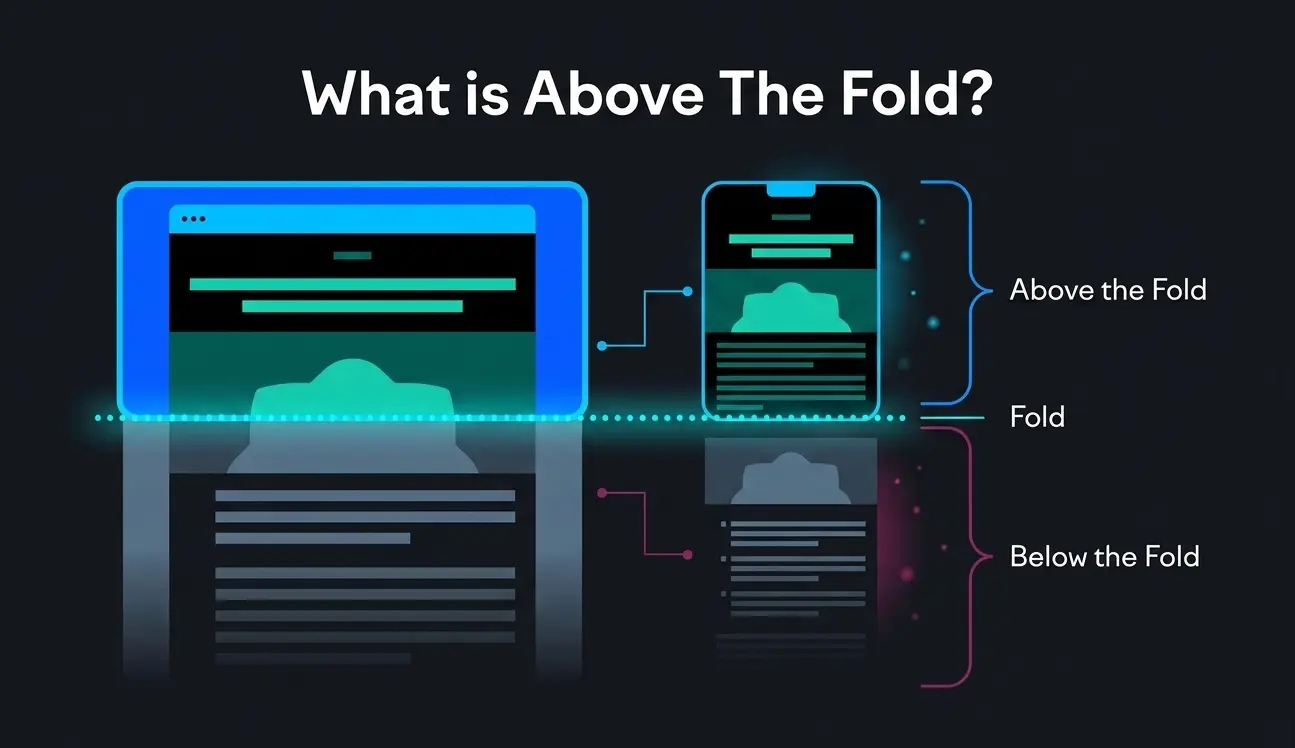
Position Zero refers to the featured snippet, a highlighted content block that Google displays above all organic search results, immediately below any paid ads. It is called “Position Zero” because it occupies a slot above the traditional first-ranked result.
Featured snippets come in four primary formats:
- Paragraph snippets (approximately 70-82% of all snippets): A short block of text, typically 40 to 60 words, directly answering a definitional or explanatory query.
- List snippets (approximately 14% to 19%): Ordered or unordered lists extracted from step by step content, recipes, rankings, or feature summaries.
- Table snippets (approximately 20%): Data pulled from HTML tables most common for pricing, comparisons, and specifications.
- Video snippets (approximately 10%): A video clip with a timestamp, pulled from YouTube results for how to queries.
Featured snippets appeared in an estimated 19% of all Google search queries as of late 2025/early 2026. When they do appear, they can capture between 40 to 60% of all clicks on that result page more than the traditional first organic result. Crucially, featured snippets are also the primary content source for voice search: Google Assistant, Siri, and Alexa all read featured snippet content aloud in response to voice queries.
| Featured snippets are 3x easier to win than ranking at traditional position 1, because most publishers do not specifically optimize for them and they are now a primary source for AI chatbot citations. |
How to Optimise for Position Zero
Winning a featured snippet requires a specific approach to content structure. Google extracts snippet content from pages that already rank on the first page of organic results so strong baseline SEO is a prerequisite. Beyond that:
- Target question-based queries: Featured snippets most commonly appear for queries beginning with “what is”, “how does”, “why”, “how to”, and “what are”. Format content around these question structures.
- Answer the question directly: Place a concise, direct answer in the first 1 to 2 sentences immediately following the H2 or H3 that mirrors the search query. Do not bury the answer.
- Use the correct format for the query type: Lists rank for step by step content; tables rank for comparison queries; paragraph boxes rank for definitions. Match your format to the intended query intent.
- Implement schema markup: FAQ schema and HowTo schema increase eligibility for rich results and AI citation.30% to over 80% (specifically 82%)
- Keep definition snippets under 60 words: Definition style paragraph snippets are typically 40 to 60 words. Concise, direct answers fit Google’s extraction preference.
For the full breakdown of query fan-out, sub-query mapping, fan-out gaps, and optimization strategies for AI search visibility → see: What Is Query Fan-Out? How LLMs Expand Search Queries and Why It Matters for SEO
Answer Engine Optimization (AEO): Optimising for the New Search Reality
Answer Engine Optimization (AEO) is the practice of structuring content so that AI-powered platforms can find it, understand it, and cite it as the direct answer to a user’s query. If traditional SEO is about ranking in a list of links, AEO is about becoming the answer itself.
AEO does not replace SEO it extends it. Websites still need to be crawled, indexed, and trusted. But ranking alone is no longer sufficient when approximately 58-65% of search sessions never generate a click. AEO is what bridges the gap between a high organic ranking and actual visibility inside AI generated summaries, featured snippets, voice results, and knowledge panels.
Core AEO Techniques
- Create explicit FAQ sections with H3 formatted questions and direct 2 to 4 sentence answers beneath each.
- Use structured data (schema.org): FAQPage, HowTo, Article, and Product schema all increase citation eligibility.
- Write in conversational, question-led language that mirrors how users speak to voice assistants and AI chatbots.
- Build topical authority: Publish comprehensive, interconnected content across a topic cluster rather than isolated keyword-targeted pages.
- Earn E-E-A-T signals off site: AI systems evaluate authority through external validation press mentions, backlinks from authoritative domains, and consistent entity presence across the web.
- Prioritise structured formats: Tables, numbered lists, and clearly labelled comparison sections are most easily extracted by AI retrieval systems.
The brands and publishers winning in 2026 are those building content systems that work simultaneously across traditional organic search, AI Overviews, featured snippets, and conversational AI platforms not those optimising for any single channel in isolation.
Frequently Asked Questions
What is an answer engine, and how is it different from a search engine?
An answer engine provides a direct response to a user query within its own interface no click required. A traditional search engine returns a ranked list of links to external pages where the user must go to find the answer. Google, ChatGPT Search, Perplexity, and voice assistants like Alexa are all forms of answer engines. The key difference is the output: links vs. a synthesised answer.
What is zero-click search, and should I be worried about it?
Zero-click search occurs when a user’s query is fully resolved on the search results page itself through a featured snippet, AI Overview, knowledge panel, or similar SERP feature without clicking through to any website. Approximately 58-65% % of Google searches in 2026 end this way. For businesses, this means that optimising for on-SERP visibility (being featured in snippets and AI summaries) is now as important as optimising for clicks and traffic.
What is Position Zero, and how do I rank for it?
Position Zero is the featured snippet box that 48% to 55% of all Google searches in early 2026 feature AI Overviews (formerly SGE) displayed above all organic results . To rank for it: ensure your page already ranks on page one organically, then directly answer the target question in the first 1 to 2 sentences of the relevant section, using the appropriate format (paragraph, list, or table) for the query type. FAQ schema and HowTo schema further increase your eligibility.
Is SEO being replaced by Answer Engine Optimization (AEO)?
No, AEO extends SEO rather than replacing it. AI answer engines draw primarily from pages that already rank well organically, so strong technical SEO and content quality remain the foundation. AEO adds a layer of structured formatting, FAQ design, schema markup, and entity clarity that makes high ranking content more likely to be extracted and cited in AI generated answers, featured snippets, and voice results.
Which answer engines should I optimise for in 2026?
The most important platforms to optimise for in 2026 are: Google AI Overviews (the largest reach globally), ChatGPT Search (growing rapidly via Microsoft/OpenAI distribution), Perplexity (preferred by research oriented users), and voice assistants (Alexa, Siri, Google Assistant). Each relies on structured, authoritative content meaning a well executed AEO strategy built on strong SEO fundamentals covers most platforms simultaneously.
Is AEO still relevant if my business is transactional (e commerce)?
While zero click behaviour is most acute for informational queries, transactional businesses benefit from AEO at the discovery stage when potential customers are researching a category, comparing options, or forming purchase intent. Appearing in AI summaries and featured snippets at that stage builds brand awareness and influences downstream purchasing decisions, even before a user reaches a transactional search.
Conclusion: The Search Engine Is Becoming an Answer Engine
The distinction between a search engine and an answer engine is no longer theoretical; it is the operational reality of search in 2026. With nearly two thirds of all Google searches ending without a click, the results page itself has become the final destination for most informational queries.
Featured snippets, AI Overviews, and voice assistants have transformed Position Zero from a nice to have into a critical visibility objective. And Answer Engine Optimization, the practice of structuring content so AI systems can extract and cite it, has become the discipline that separates brands that appear in the modern search experience from those that don’t.
The good news: you don’t have to choose between traditional SEO and AEO. The brands winning in 2026 are those building content that ranks on page one and is structured to be cited by AI simultaneously, from the same assets.