AEO helps your content become the direct answer in AI tools new to AEO? read: What is AEO?
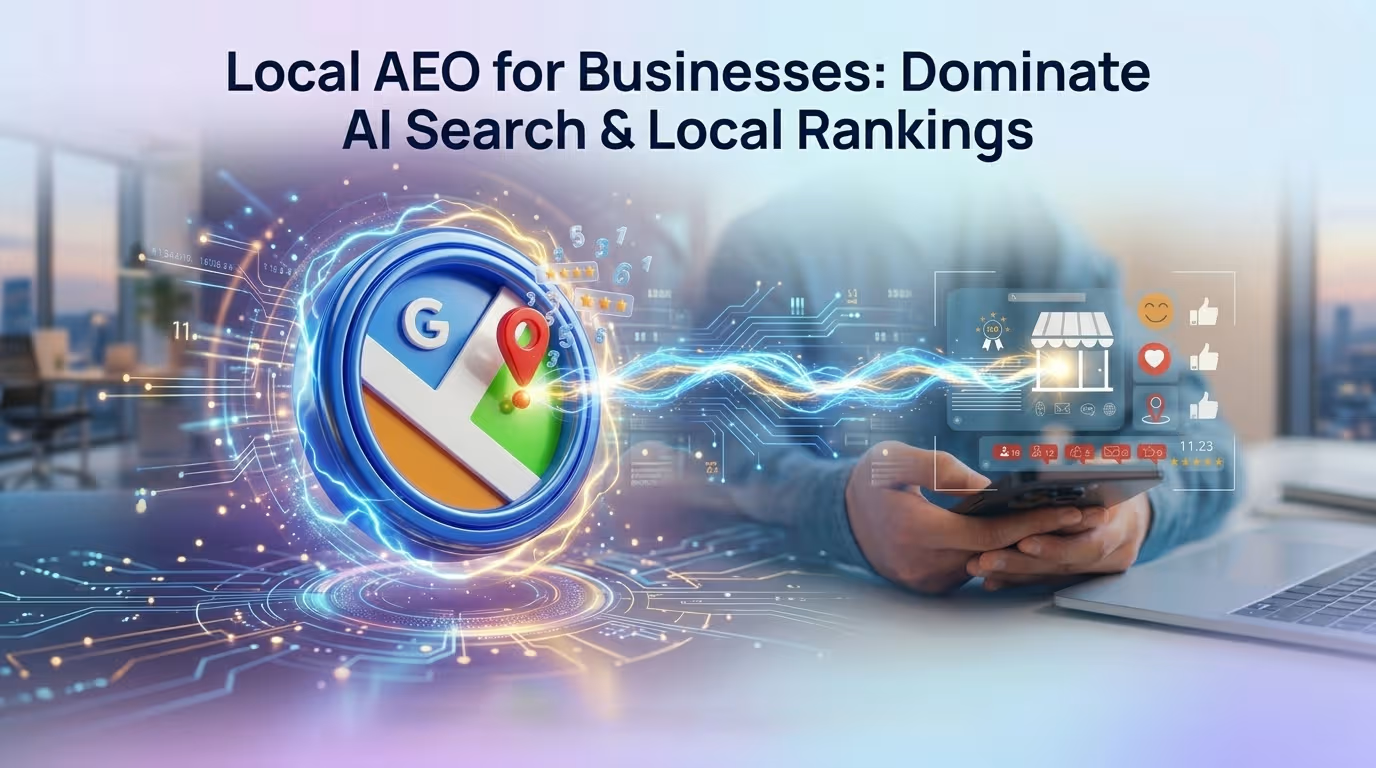
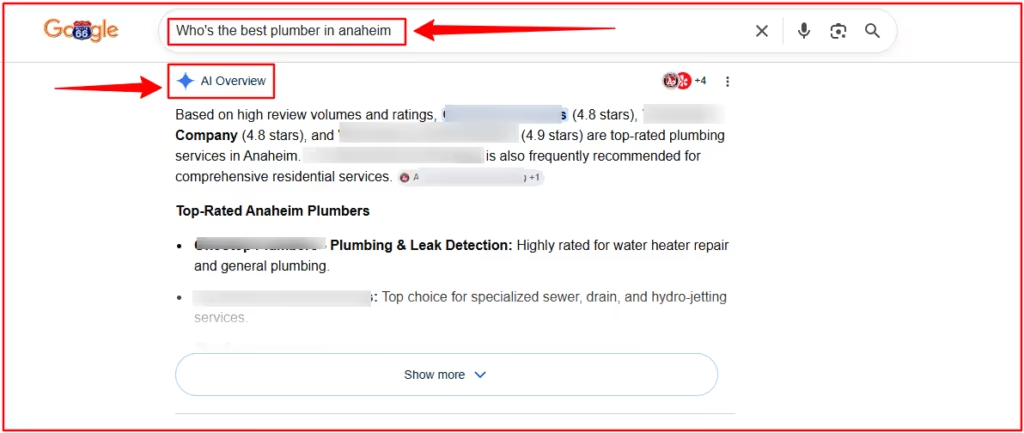
When someone asks, “Who’s the best plumber in Anaheim” or “What dentist is open right now in Brooklyn?”, AI systems pull from structured, authoritative local content to generate those answers. In my experience working with hundreds of local service businesses, the difference between being cited and being ignored often comes down to how well you’ve implemented AEO best practices.
Why Local AEO Matters for Your Business in 2026
The numbers tell the story. According to recent industry research, 58% of voice searches are looking for local business information, and voice commerce is projected to reach USD 86 billion by 2026. More importantly, over 900 million people use ChatGPT weekly for information, and Gartner predicts that by February 2026, 25% of organic search traffic will shift to AI chatbots instead of traditional search clicks.
Here’s what I’ve observed across my client portfolio: local businesses that master AEO capture customers at their highest intent moments. Someone asking an AI assistant for an emergency plumber isn’t browsing. They’re ready to book. If your business is the answer the AI provides, you’ve essentially skipped the entire consideration phase.
The Three-Layer Local AEO Implementation Stack
Local AEO isn’t a replacement for traditional local SEO. It’s an extension. I recommend a three- layer approach that builds progressively, with each layer strengthening the foundation below it.
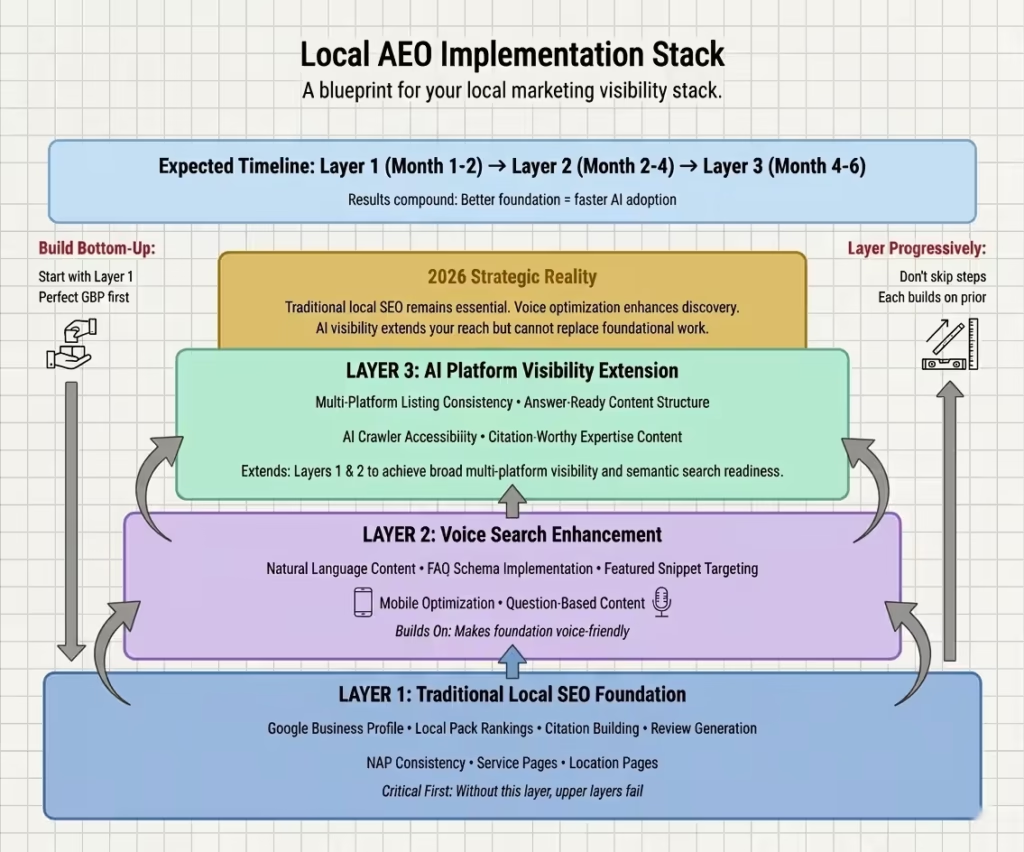
Layer 1: Traditional Local SEO Foundation (Months 1-2)
Without a solid local SEO foundation, the upper layers of your AEO strategy will fail. This layer includes Google Business Profile optimization, local pack rankings, citation building, and review generation. Your NAP (Name, Address, Phone) must be consistent across every platform.
- Claim and fully optimize your Google Business Profile
- Build citations across top local directories (Yelp, Yellow Pages, Apple Maps, Bing Places)
- Establish a review acquisition system targeting 4+ reviews monthly
- Create dedicated service pages and location pages on your website
- Ensure mobile optimization and fast page load times
Layer 2: Voice Search Enhancement (Months 2-4)
Voice search optimization bridges traditional SEO and AI visibility. This layer makes your content voice-friendly by focusing on natural language, question-based content, and featured snippet targeting.
- Implement FAQ schema on service pages and location pages
- Create content that answers specific customer questions (“How much does X cost?”)
- Target featured snippets with concise, structured answers in your first paragraph
- Optimize for natural, conversational queries instead of keyword fragments
- Add OpeningHoursSpecification schema to ensure voice assistants know when you’re open
Layer 3: AI Platform Visibility Extension (Months 4-6)
This layer extends your reach to AI platforms beyond Google. It focuses on multi-platform listing consistency, answer-ready content structure, AI crawler accessibility, and creating citation-worthy expertise content.
- Ensure AI crawlers (GPTBot, OAI-SearchBot, PerplexityBot) are not blocked in robots.txt
- Create comprehensive, self-contained content sections that AI can extract cleanly
- Publish authoritative content (case studies, how-to guides, local market analyses)
- Maintain consistent business information across all third-party platforms
- Monitor brand mentions in ChatGPT, Gemini, and Perplexity using tools like HubSpot AEO
Google Business Profile: Your AEO Command Center
If I could give you only one piece of AEO advice, it would be this: treat your Google Business Profile as your primary AEO asset. In 2026, your GBP feeds data to Google Maps, AI Overviews, voice assistants, ChatGPT, Gemini, and Perplexity. It’s the single most leveraged piece of digital real estate you own.
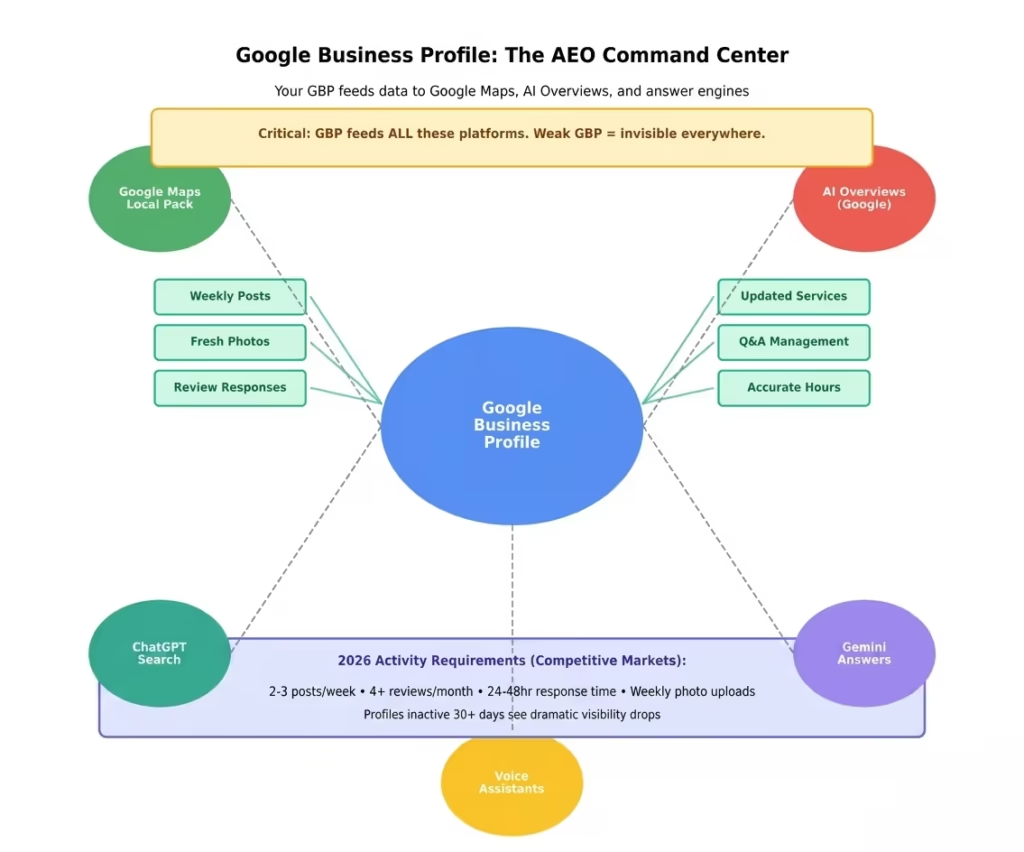
2026 GBP Activity Requirements
Based on current data from BrightLocal and LocalMighty, here are the activity benchmarks I recommend for competitive markets:
- Post 2-3 times per week (mix of updates, offers, events, and FAQs)
- Generate 4+ new reviews monthly with active owner responses within 24-48 hours
- Upload fresh photos weekly (team, work in progress, completed projects, location)
- Update business hours immediately when they change, including holiday hours
- Respond to all Q&A questions with service and location context
- Monitor profile insights monthly and adjust strategy based on what drives engagement
Multiple studies in early 2026 have documented dramatic visibility drops for profiles that go 30+ days without owner activity. Google’s algorithm now treats profile freshness as a top-tier ranking signal. I’ve seen clients recover lost visibility within 2-3 weeks simply by resuming consistent posting and photo uploads.
LocalBusiness Schema: Speaking the Language AI Understands
Schema markup is structured data that translates your human-readable website content into machine-readable language. Think of it as explicit labels that tell AI systems exactly what each piece of information represents.
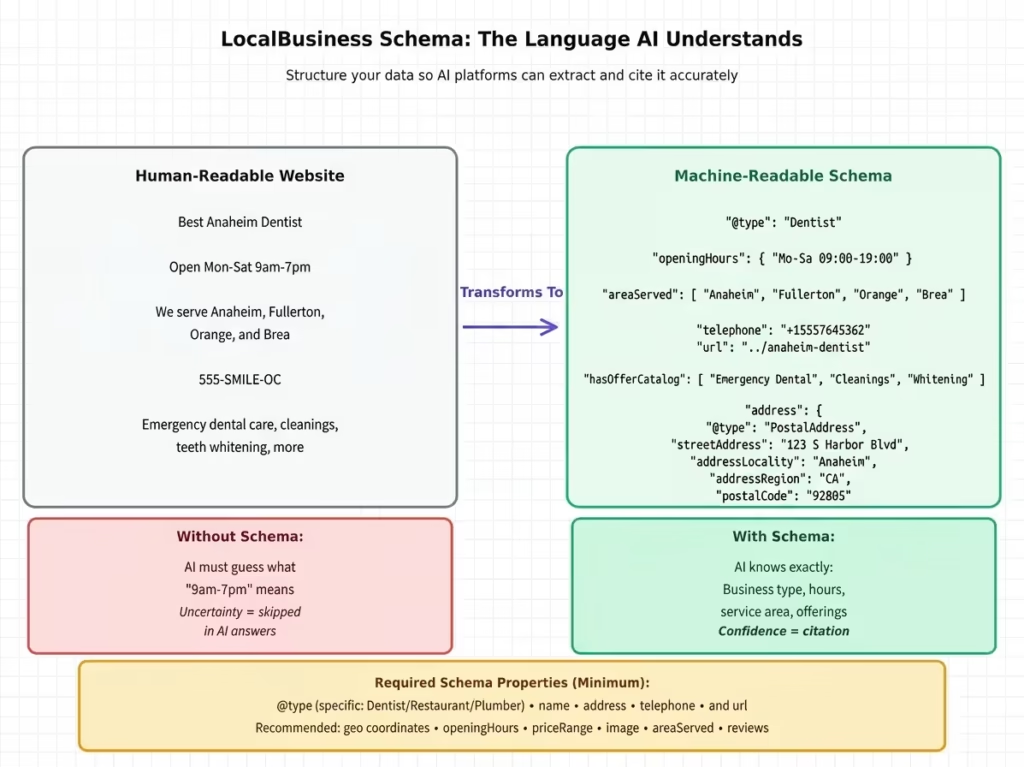
Required Schema Properties
According to Google’s documentation (last updated February 2026), these are the minimum required properties:
- @type: Use the most specific business type (Dentist, Restaurant, Plumber, not generic LocalBusiness)
- name: Your exact legal business name, no keyword stuffing
- address: Full PostalAddress object with streetAddress, addressLocality, addressRegion, postalCode, addressCountry
- telephone: Primary phone number in E.164 format (+15551234567)
Strongly Recommended Schema Properties
These aren’t technically required, but omitting them significantly reduces your chances of AI citation:
- geo: GeoCoordinates object with latitude and longitude (find these in your Google Maps URL)
- openingHoursSpecification: Structured hours using OpeningHoursSpecification objects, not plain text
- priceRange: Dollar sign indicators ($, $$, $$$) help AI filter by budget
- image: High-quality images of your location, team, or work
- areaServed: Cities, neighborhoods, or regions you serve
- aggregateRating: If you have reviews, mark them up properly
- sameAs: Links to your verified social profiles (Facebook, LinkedIn, Instagram)
Implementation format matters. Use JSON-LD (not microdata or RDFa) placed in the <head> or <body> of your homepage. JSON-LD is cleaner, easier to maintain, and preferred by Google. Always validate your schema using Google’s Rich Results Test before deployment.
Content That AI Platforms Can Extract and Cite
AI systems excel at extracting information from well-structured, self-contained content. From my testing across multiple client sites, here’s what works best:
Answer-First Content Structure
Put your answer in the first paragraph, ideally within the first 50 words. AI platforms prioritize content that directly answers the query upfront. After the direct answer, you can elaborate with details, examples, and supporting evidence.
Self-Contained Sections
Each major section should be independently understandable. AI often extracts single sections, not entire articles. Avoid excessive cross-references like “as mentioned above” or relying on pronouns. Name entities explicitly every time.
Hyper-Local Content
Create content tied to specific neighborhoods, landmarks, and local questions. Examples: “Emergency Plumber in Park Slope: What to Do When Pipes Freeze” or “Dental Implants Manhattan: Cost Comparison by Neighborhood.” This hyper-local specificity is exactly what AI systems need to match queries to businesses.
Include Tables and Structured Lists
AI platforms love structured data embedded in content. Comparison tables, pricing matrices, step-by-step numbered processes, and feature checklists all improve extractability. I’ve seen content with clear tables get cited 3x more often than prose-only pages.
Review Strategy: Velocity Over Volume
Here’s a critical insight from recent research: Google and AI platforms now care more about review velocity (how fast you acquire new reviews) than total review count. According to analysis published in February 2026, 4 recent reviews per month outweighs 50 old reviews in the ranking algorithm.
I recommend implementing a systematic review request process. Send requests within 24 hours of service completion when the experience is fresh. Make it effortless using Google’s official review links or QR codes. Never incentivize reviews with discounts or payments (Google’s policy strictly prohibits this), but do request reviews from all customers equally.
The Power of Detailed Reviews
Guide customers to leave detailed reviews that mention specific services, amenities, or experiences. A review that says “Great service!” provides minimal signal. A review that says “The emergency drain cleaning was fast, the technician explained everything clearly, and the pricing was transparent” gives AI systems specific facts they can extract and cite.
Respond to every review within 24-48 hours. Your responses should reinforce relevance by naturally mentioning your services and location. Example: “Thank you for choosing us for your Park Slope plumbing needs. We’re glad our emergency drain cleaning service met your expectations.”
Measuring AEO Success: New Metrics for 2026
Traditional local SEO metrics (rankings, organic traffic, click-through rates) still matter, but AEO introduces new measurement dimensions. Here’s what I track for my clients:
- AI Brand Mentions: Use tools like HubSpot AEO ($50/month) or manually test prompts in ChatGPT, Gemini, Perplexity
- Citation Sentiment: Are AI mentions positive, neutral, or negative?
- Share of Voice: How often are you cited vs. competitors for category queries?
- Direct Conversions: Track phone calls, form fills, and bookings that don’t show website referrals (AI users often bypass sites)
- GBP Activity Engagement: Monitor post views, photo views, direction requests, website clicks in GBP Insights
- Review Velocity: Track new reviews per month, response rate, and response time
I typically see meaningful AEO improvements within 3-6 months when the three-layer approach is followed systematically. The key is consistency. Monthly content reviews, quarterly schema audits, and continuous GBP activity are non-negotiable.
Common Local AEO Mistakes I See Businesses Make
After auditing hundreds of local business websites, these are the most frequent AEO failures:
- Neglecting Google Business Profile: Treating it like a set-it-and-forget-it directory listing instead of your most important local asset
- Using Generic LocalBusiness Schema: Failing to use specific subtypes (Dentist, Plumber, Restaurant) dramatically reduces AI confidence
- Blocking AI Crawlers: Having GPTBot, OAI-SearchBot, or PerplexityBot blocked in robots.txt makes you invisible to those platforms
- Publishing Thin Local Pages: Creating duplicate location pages with only address changes and no unique value
- Ignoring Review Responses: Letting reviews sit unanswered sends negative signals to both Google and AI platforms
- Keyword-Stuffed Business Names: Adding service keywords to your GBP business name violates Google’s guidelines and triggers penalties
- Outdated Operating Hours: Inaccurate hours are a top cause of negative reviews and lost visibility
- No FAQ Schema: Missing the easiest schema win for voice search and AI extraction
Realistic Implementation Timeline
Here’s the timeline I use with clients, broken down by priority:
Month 1: Foundation Setup
- Claim and verify Google Business Profile
- Complete all GBP sections (100% profile completion)
- Audit and fix NAP consistency across top 25 directories
- Implement basic LocalBusiness schema on homepage
- Set up review request system
Month 2: Content and Activity
- Create dedicated service pages with FAQ schema
- Build location-specific pages with hyper-local content
- Start weekly GBP posting schedule
- Upload professional photos to GBP (minimum 20 high-quality images)
- Implement OpeningHoursSpecification schema
Months 3-4: Enhancement
- Add Service schema and Product schema where applicable
- Create answer-first content targeting common customer questions
- Optimize for featured snippets
- Expand schema to include geo coordinates, price range, area served
- Monitor early AI mentions and adjust content strategy
Months 5-6: AI Platform Expansion
- Verify AI crawlers are not blocked
- Test brand mentions in ChatGPT, Gemini, Perplexity
- Publish comprehensive guides and case studies
- Implement advanced schema (breadcrumb, review, event)
- Establish monitoring and reporting cadence
Ongoing Maintenance Requirements
AEO is not a one-time project. It’s an ongoing operational rhythm. Based on my client work, here’s the sustainable maintenance schedule:
Weekly Tasks
- Publish 2-3 GBP posts
- Upload 3-5 new photos to GBP
- Respond to all new reviews within 24-48 hours
- Monitor and answer Q&A questions
Monthly Tasks
- Review GBP Insights and adjust strategy
- Audit review velocity (target 4+ new reviews)
- Update any changed business information
- Publish 1 new piece of hyper-local content
- Test AI brand mentions
Quarterly Tasks
- Full schema validation and audit
- Citation consistency sweep
- Competitor AEO analysis
- Category and attribute review
- AI visibility report
Frequently Asked Questions About Local AEO
Q: Do I still need traditional local SEO if I implement AEO?
A: Absolutely, AEO builds on top of local SEO; it doesn’t replace it. Your Google Business Profile, citations, reviews, and website optimization remain critical. AEO extends your visibility to AI platforms, but the foundation must be solid first.
Q: How long does it take to see results from AEO?
A: You’ll typically see improvements in AI mentions within 3-6 months when implementing the three-layer approach systematically. However, traditional local SEO results (rankings, traffic) often improve faster, within 4-8 weeks of foundational work.
Q: Is AEO only for certain types of businesses?
A: All local businesses benefit from AEO, but service providers, healthcare, legal, home services, and restaurants see particularly strong results because customers frequently ask AI assistants for recommendations in these categories.
Q: Can I implement AEO myself or do I need an agency?
A: Many aspects of AEO (GBP optimization, schema implementation, content creation) are DIY-friendly if you have technical skills. However, schema markup and ongoing monitoring often benefit from professional support, especially for multi-location businesses.
Q: What if I don’t show up in ChatGPT or Gemini searches?
A: This is normal in the early stages. Focus first on strengthening your foundation (Layer 1), then ensure you’re not blocking AI crawlers, and finally create comprehensive, citation-worthy content. Monitor monthly and iterate based on what works.
Q: Does AEO hurt my website traffic?
A: Zero-click searches (where AI answers the question without a click) can reduce some website traffic, but they dramatically increase high-intent conversions. In my experience, businesses optimized for AEO see more direct phone calls and bookings even if website sessions decline slightly.
Final Thoughts: AEO Is Not Optional Anymore
Over the past years, I’ve watched search evolve from keyword matching to semantic understanding to now, AI-powered answers. Each evolution favored businesses that adapted early. AEO is no different.
The businesses investing in AEO now will earn disproportionate visibility, trust, and demand as AI search continues to grow. The good news is that local AEO is accessible. You don’t need a massive budget. You need a systematic approach, consistency, and attention to the technical details that AI platforms require.
Start with your Google Business Profile. Make it complete, active, and authoritative. Add Local Business schema to your website. Create answer-first content. Generate consistent reviews. Monitor your AI visibility. These fundamentals will put you ahead of 95% of your local competitors.
If you have questions about implementing AEO for your specific business or market, I’m happy to help. This is what I do every day for local businesses across the United States, and I’ve seen firsthand how powerful proper AEO implementation can be.