
What Is SEO? A Clear, Simple Definition
SEO stands for Search Engine Optimization. It is the practice of improving your website’s visibility in organic (unpaid) search engine results. When someone types a query into Google, Bing, or any other search engine, SEO determines whether your page appears at the top or gets buried on page five where nobody ever clicks.
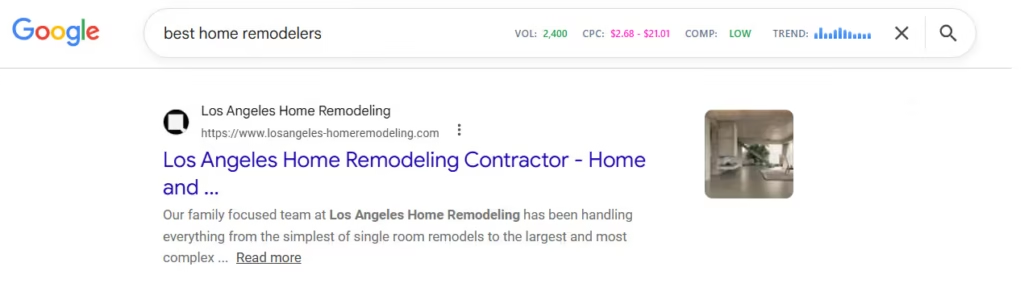
Think of it this way: Google is a librarian. Your website is a book. SEO is the process of making sure your book is well-written, clearly labeled, and easy for the librarian to find and recommend to the right reader.
“SEO is about helping search engines understand your content, and helping users find your site and make a decision about whether they should visit.” Google Search Essentials
The goal is simple: rank higher in search results to attract more qualified visitors and people who are actively looking for what you offer. Unlike paid advertising, the traffic you earn through SEO keeps coming even after you stop actively investing in it. I’ve seen client websites continue gaining traffic for 2-3 years from a single well-optimized piece of content.
SEO vs. SEM vs. PPC: What’s the Difference?
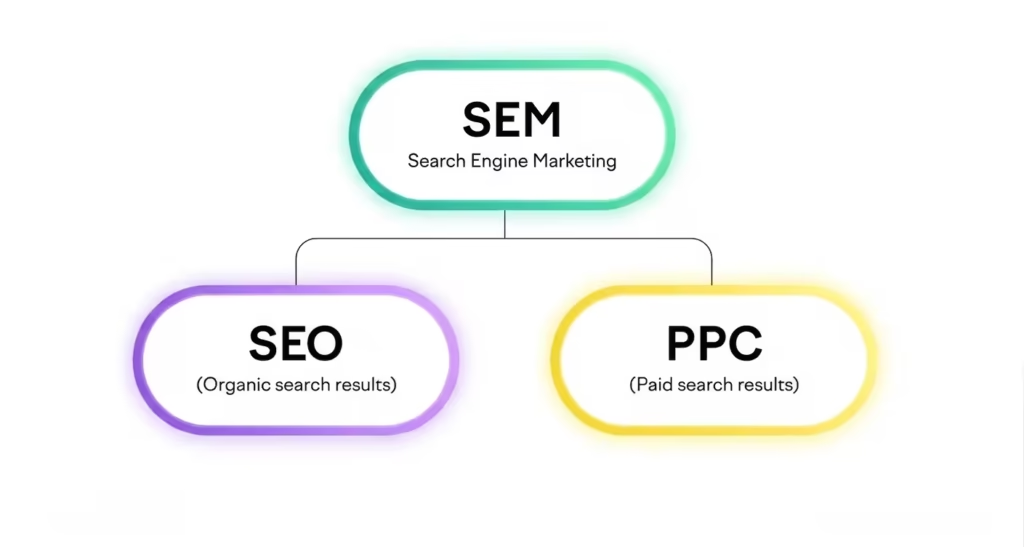
These three terms often get confused. Here’s a quick breakdown:
| Term | What It Means | Cost Structure |
| SEO | Organic search optimization earning rankings without paying per click | Time + effort investment; no per-click cost |
| SEM | Search Engine Marketing umbrella term covering both SEO and paid ads | Combined organic + paid |
| PPC | Pay-Per-Click paid ads that appear at the top of search results | Pay for every click received |
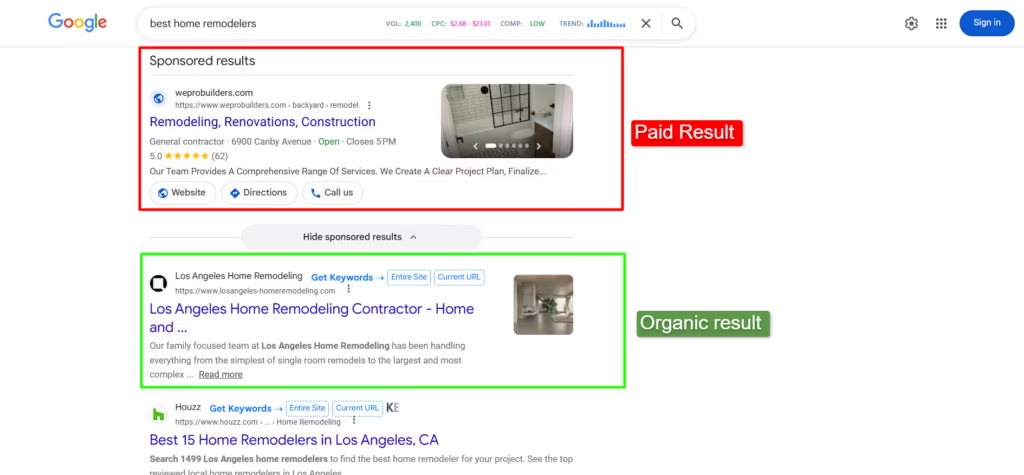
Paid results don’t show up on every search engine results page (SERP). When they do appear, they’re typically placed at the top and marked with labels like “Sponsored” or “Ad.”
For example:
Why Does SEO Matter? The Numbers Don’t Lie
I’ve worked with businesses that treated SEO as an afterthought and others that made it their primary growth engine. The difference in outcomes is staggering. Here’s what the data tells us about the state of SEO in 2026:
- Organic search drives approximately 53% of all website traffic more than paid search, social media, email, and direct traffic combined ( 2026)
- The global SEO services market is valued at $108.28 billion in 2026, projected to reach $203.83 billion by 2030 (Research and Markets)
- For every $1 invested in SEO, businesses earn an average of $7.48 over a 3-year period a 748% ROI
- 90.63% to 96.55% of web pages receive zero traffic from Google the gap between optimized and unoptimized sites has never been wider ( 2026)
- The #1 organic result on Google captures approximately 27% to 40% of all clicks, while position #2 gets 15% to 16% second page results receive less than 1% of clicks (2026)
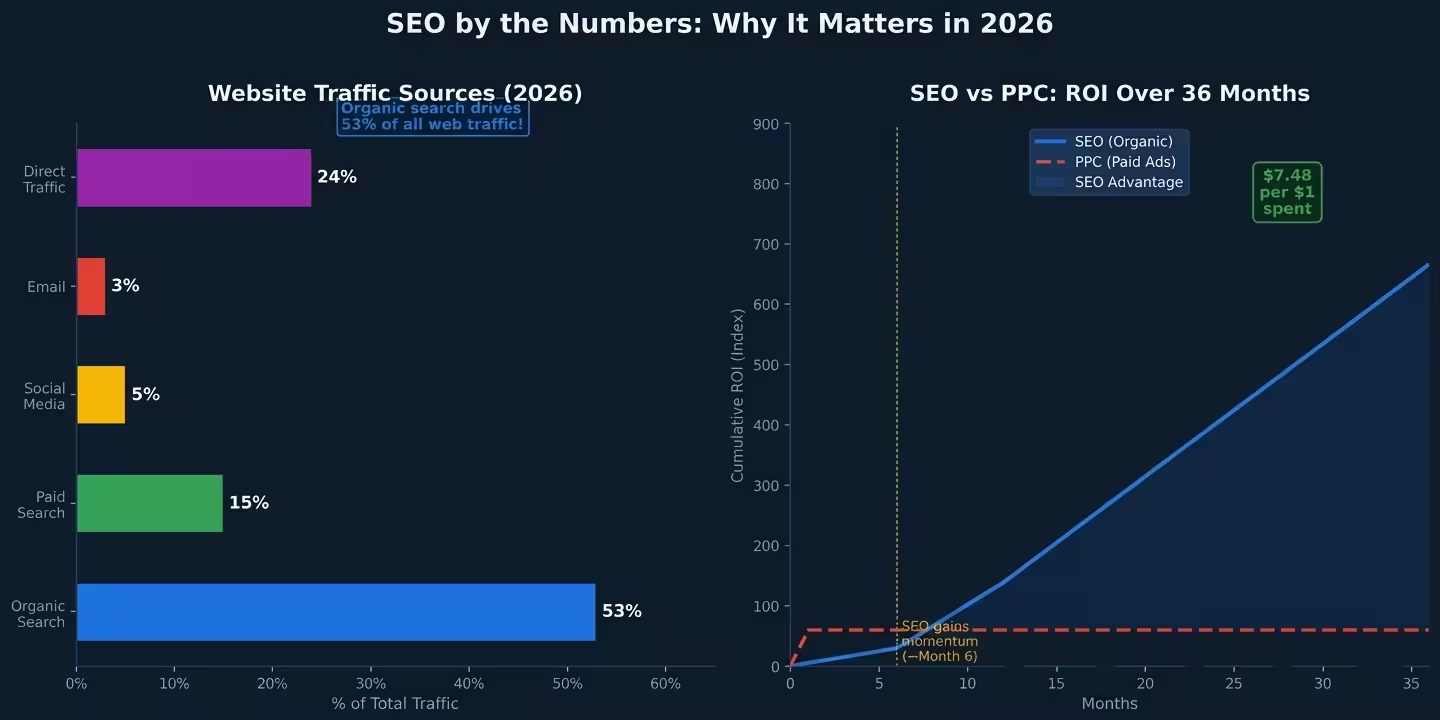
My own experience confirms these numbers. One client in the e-commerce space went from 3,000 monthly organic visitors to over 87,000 in 18 months entirely through a consistent SEO strategy, without increasing their paid ad spend by a single dollar.
Even with the rise of AI Overviews and zero-click searches, organic search remains dominant. In fact, 63% of SEO professionals report that Google’s AI Overviews have positively impacted their organic traffic (AMW Group, 2026). The landscape is shifting, but the fundamentals remain strong.
How Do Search Engines Actually Work?
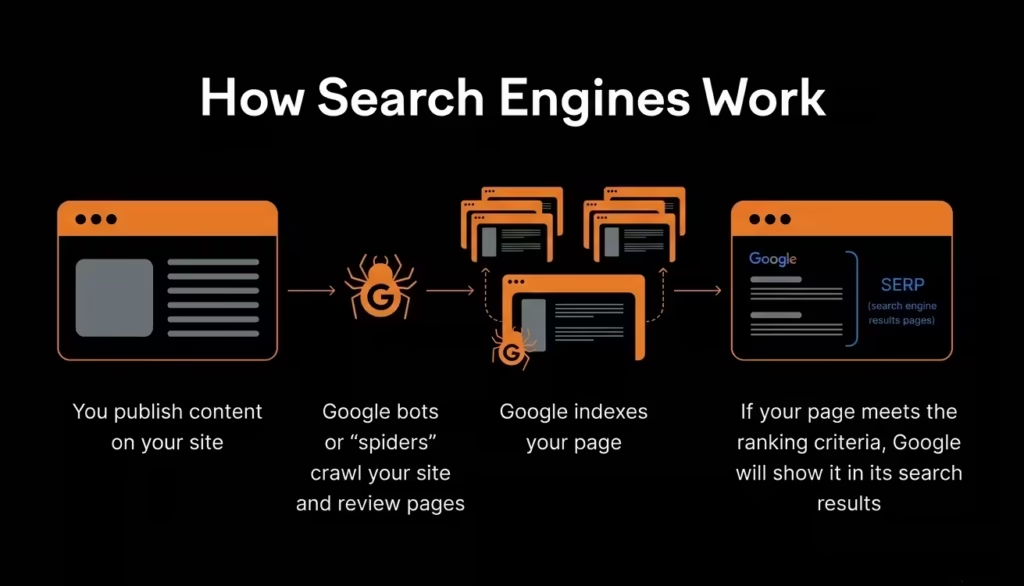
Before you can optimize for search engines, you need to understand how they work. Every time someone performs a search, Google runs through a three-step process that happens in under half a second:
Step 1: Crawling
Google uses bots like Googlebot to explore pages by following links across the web. If your links and site structure are weak, your pages might never get discovered.
Step 2: Indexing
After crawling, Google stores and analyzes pages in its search index database. Low-quality, duplicate, or broken pages may be skipped and won’t appear in search.
Step 3: Ranking
Google ranks pages based on many factors like relevance, speed, and authority.It aims to match search results with the user’s true intent behind the query.
When your content shows up in search results, it can appear in different formats, including traditional listings (the standard blue links).
In addition, Google displays various SERP features (non-traditional results) to improve the user experience.
For example, this SERP includes a “Popular Products” section:
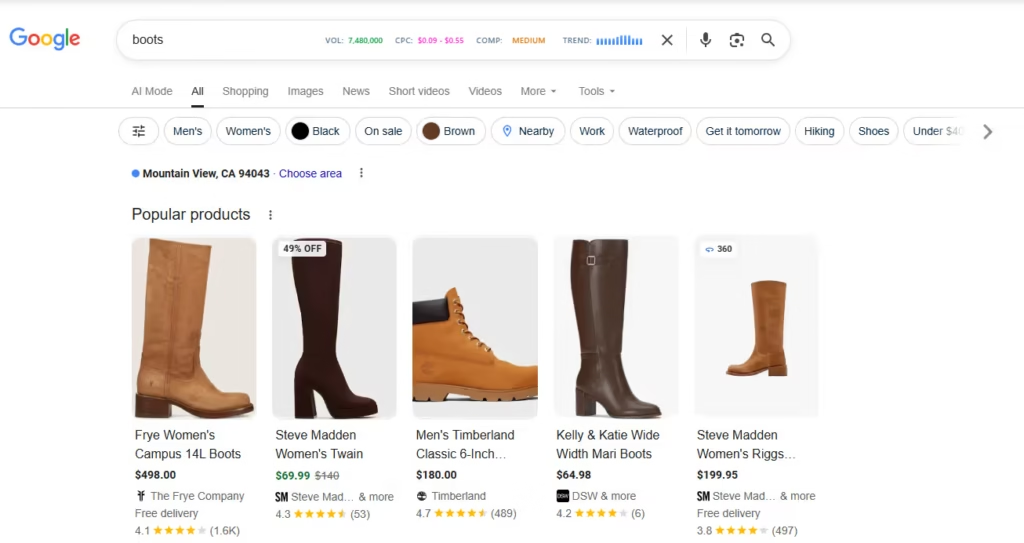
The SERP also features rich snippets, which are standard results enhanced with extra details such as images and star ratings.

Want to really understand how search engines work and boost your rankings? Don’t miss this: What is a Search Engine?
Key insight: Google doesn’t rank websites. It ranks individual pages. Each page on your site is a separate opportunity to appear in search results for a different query.
The Types of SEO (And Why You Need All of Them)
SEO is not a single tactic, It’s a discipline made up of interconnected categories.. I’ve seen businesses make the mistake of focusing exclusively on one while neglecting the others. Sustainable rankings require all four working in harmony.
On-Page SEO: What You Say and How You Say It
On-page SEO covers everything you control directly on your web pages: the content itself, how it’s structured, and how it’s labeled for both users and search engines.
- Keyword research and strategic keyword placement
- Title tags (the clickable blue text in search results) keep these under 60 characters
- Meta descriptions your 160-character pitch to earn the click
- Header structure (H1, H2, H3) for both readability and topic signaling
- URL slug is the unique part of a webpage’s address.
- Internal linking connecting related pages to distribute authority
- Image optimization with descriptive alt text
- Content depth and topical authority
It’s also important to avoid keyword stuffing unnaturally forcing keywords into your content because Google treats this as a spammy practice. Violating Google’s spam policies can result in penalties that negatively impact your search visibility.
A question on many marketer’s minds today: Is keyword research really dead in the AI era?
Off-Page SEO: What Others Say About You
Off-page SEO is about building your website’s reputation and authority. The most powerful signal is backlinks links from other websites pointing to yours. Google treats these as “votes of confidence.” A link from a high-authority site like a major news outlet or university carries far more weight than a link from an unknown blog.
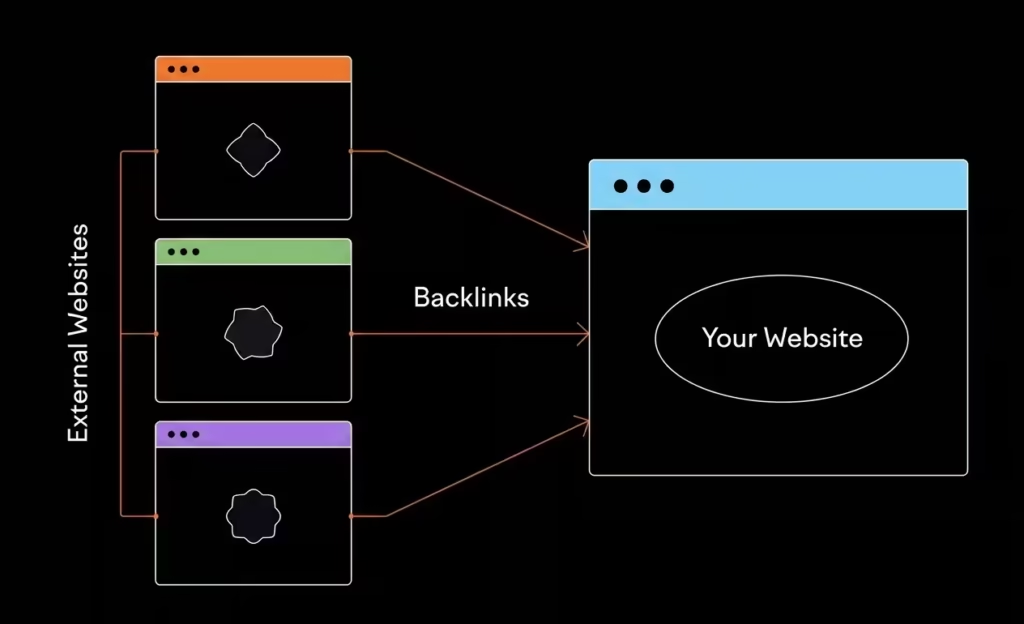
Other off-page signals include brand mentions (even without a direct link), social signals, and your presence in industry directories and citations.
Technical SEO: Making Sure Google Can Access Your Site
Technical SEO ensures that search engine crawlers can efficiently access, crawl, and index your website. It’s the foundation everything else is built on. I’ve seen sites with excellent content fail to rank simply because of technical issues that prevented Google from properly reading the pages. Key technical factors include:
- Page speed and Core Web Vitals (Google’s user experience metrics)
- Mobile-first design Google uses your mobile site for ranking
- XML sitemaps to guide crawlers to your important pages
- HTTPS and SSL security certificates
- Structured data / Schema markup for rich results
- Canonical tags to prevent duplicate content issues
Local SEO: Dominating Your Geographic Market
If your business serves a specific geographic area whether it’s a restaurant, law firm, dental practice, or retail store local SEO is essential. It determines whether you appear in “near me” searches and in Google’s Local Pack (the map results shown at the top of local queries).
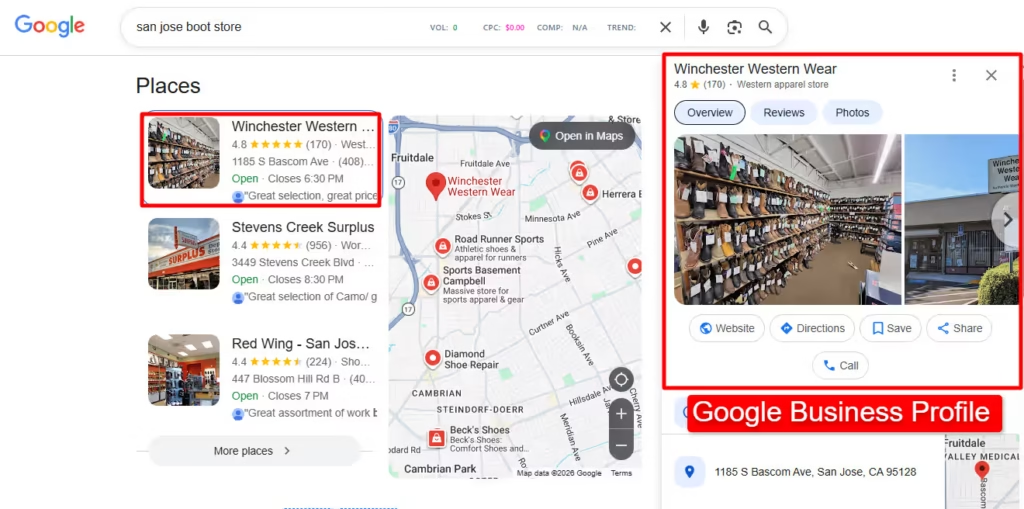
Local SEO is the process of improving your visibility in location-based search results.For example, when someone searches for “boot store near me” or “[city] boot store,” your business can appear in results tailored to their location.
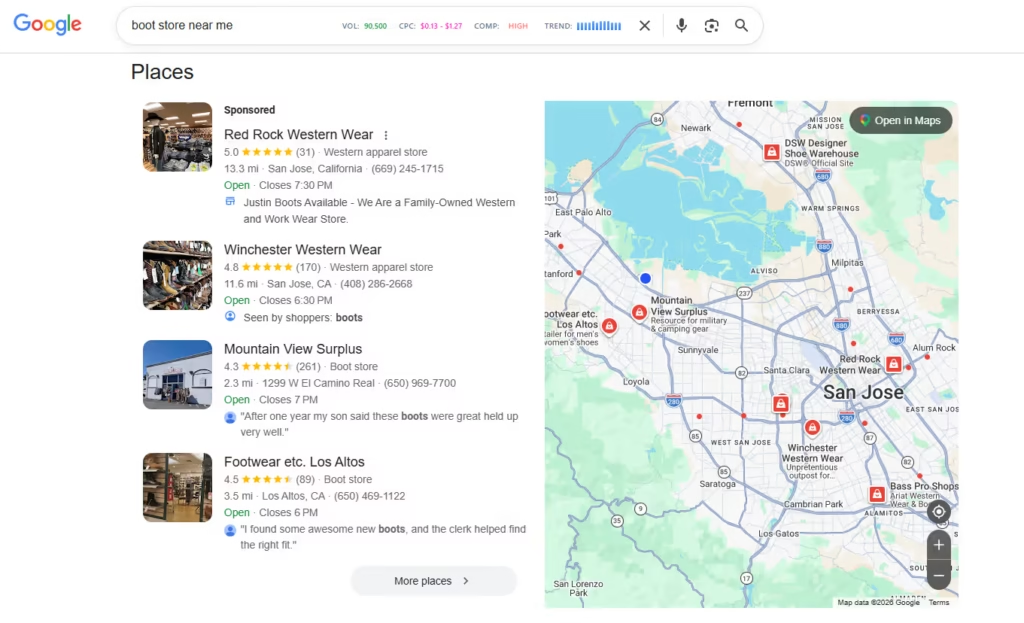
Local SEO is essential if you serve customers in a specific area or operate physical locations that people can visit.
One of the most important factors in local SEO is optimizing your Google Business Profile, as Google evaluates and ranks these profiles rather than webpages when displaying map-based results.
- Claim and fully optimize your Google Business Profile
- Ensure consistent Name, Address, and Phone (NAP) across all platforms
- Gather authentic customer reviews on Google and industry directories
- Create locally-focused content targeting geographically specific queries
Image SEO
Image SEO is the process of optimizing images on your website to improve their visibility in search results and boost your overall SEO performance.
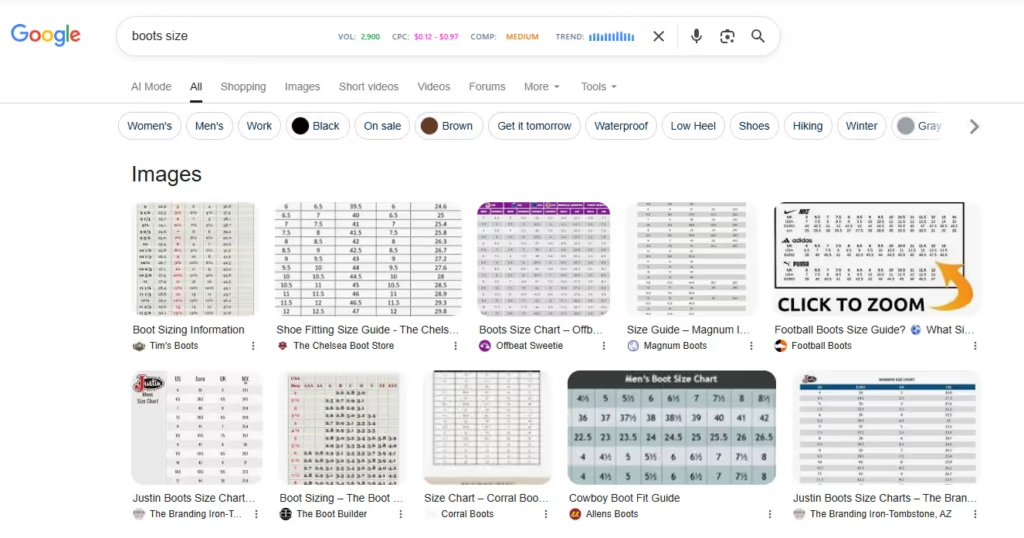
For example, optimized images can appear in prominent SERP features like a carousel displaying boot size images from multiple websites at the top of the page.
Common image SEO tactics include:
- Resizing and compressing images to improve page load speed
- Adding alt text (HTML descriptions) to help search engines and screen readers understand the image content
- Using high-quality, relevant visuals that add value for users
Google shows images within the top 20 results for more than half of the U.S. SERPs. Many users also search directly through Google Images.
This makes image SEO a strong opportunity to drive additional traffic to your website.
Video SEO
Video SEO involves creating and optimizing videos to maximize their visibility in search results both on search engines like Google and platforms like YouTube.
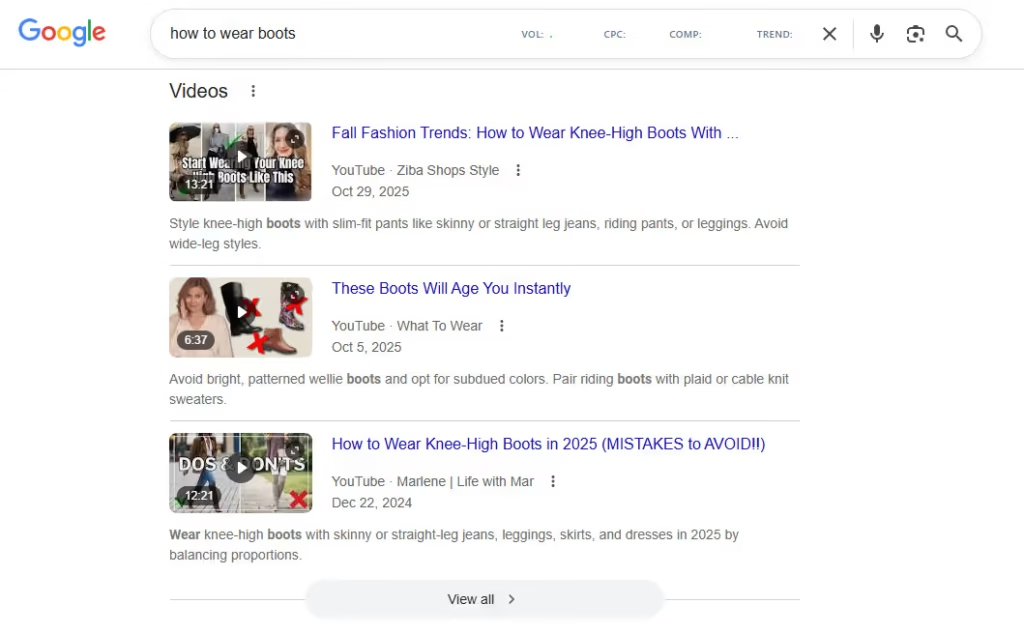
Videos can appear directly on the SERP, often increasing visibility and engagement.
Common video SEO tactics include:
- Conducting YouTube keyword research to understand what users are searching for
- Including relevant keywords in video titles and descriptions
- Adding schema markup to help search engines better understand embedded video content
How Search Intent Drives Modern SEO
The single biggest shift in SEO over the past decade is the move from keyword matching to intent matching. Google no longer just looks for pages that contain a searched phrase it tries to understand what the user actually wants to achieve.
There are four primary types of search intent, and understanding which one applies to your target keyword determines everything about how you structure your content:
| Intent Type | User Goal | Example Query | Best Content Format |
| Informational | Learn something | “What is SEO?” / “How does Google work?” | Blog posts, guides, explainers |
| Navigational | Find a specific website | “Google Search Console login” | Homepage, login page |
| Commercial | Research before buying | “Best SEO tools 2026” | Comparison articles, reviews |
| Transactional | Make a purchase or action | “Buy SEO software” / “hire SEO consultant” | Product pages, service pages |
For the query “What is SEO?” The intent is clearly informational. The searcher wants to learn, not buy. That’s why this guide is built as a comprehensive educational resource, not a sales pitch. Matching your content format to the searcher’s intent is one of the highest-leverage moves in SEO.
Key SEO Ranking Factors You Need to Know
Google’s algorithm considers hundreds of signals, but in my experience, a handful of factors consistently make the biggest difference. Focus here first:
Content Quality and Relevance
Content remains the most important ranking factor. Google’s guidelines emphasize E-E-A-T: Experience, Expertise, Authoritativeness, and Trustworthiness. Content that demonstrates first-hand knowledge, cites credible sources, and genuinely helps users will outperform thin, generic content every time. Websites with high-quality content experience up to 7x more conversions than those with lower-quality content.
Backlinks and Domain Authority
The number and quality of external websites linking to yours remains one of the strongest ranking signals. Pages ranking in position #1 typically have significantly more high-quality backlinks than those ranking lower. Focus on earning links through genuinely useful content, expert contributions, and digital PR.
Page Experience Signals
Google’s Core Web Vitals are a set of measurable metrics that evaluate user experience: Largest Contentful Paint (how fast main content loads), Interaction to Next Paint (page responsiveness), and Cumulative Layout Shift (visual stability). Poor scores here directly impact rankings, especially on mobile where 60% of all web traffic now originates.
Mobile-First Indexing
Google now uses the mobile version of your website as the primary basis for indexing and ranking. If your site performs poorly on mobile slow load times, unreadable text, difficult navigation you will lose rankings regardless of how good your content is.
User Behavior Signals
Click-through rate (CTR) from search results, time spent on page, and bounce rate all signal to Google whether users find your content valuable. A page that consistently gets clicked and keeps users engaged sends strong positive ranking signals.
A Step-by-Step SEO Process for Beginners
Here is the exact process I recommend to anyone starting their SEO journey. These steps build on each other skip one and the others become less effective:
- Perform a technical SEO audit to fix crawl errors, broken links, slow pages, and mobile issues before anything else. Use tools like Google Search Console (free) to identify critical problems.
- Define your target audience and their search intent: who are they, what do they need, and what words do they use to search for it?
- Conduct thorough keyword research to identify the specific phrases your audience types into search engines. Prioritize keywords with clear intent, reasonable search volume, and manageable competition.
- Create a content strategy plan articles, pages, and resources around your target keywords, organized into topic clusters that demonstrate topical authority.
- Write high-quality, intent-matched content that answers the searcher’s question better than anyone else on page one. Include data, examples, visuals, and actionable takeaways.
- Optimize on-page elements title tag, meta description, headers, internal links, image alt text, and URL structure.
- Build backlinks earn links through guest posts, digital PR, resource link building, and creating genuinely link-worthy content.
- Track and measure use Google Analytics and Google Search Console to monitor rankings, traffic, and conversions. Update and improve your content regularly based on performance data.
Important: SEO is a long-term investment. It typically takes 3-6 months for new content to achieve stable rankings. The businesses that win with organic search are those that commit to consistent, quality-focused effort over time, not those chasing short-term hacks.
SEO in 2026: What’s Changed and What Still Works
The SEO landscape has evolved dramatically. Here are the most important shifts I’m tracking this year and what they mean for your strategy:
AI Overviews and Zero-Click Searches
Google’s AI Overviews now appear for a growing percentage of queries, providing direct answers at the top of the SERP. Zero-click searches (where users get their answer without visiting any website) have reached approximately 58.5% of all Google searches in 2026.
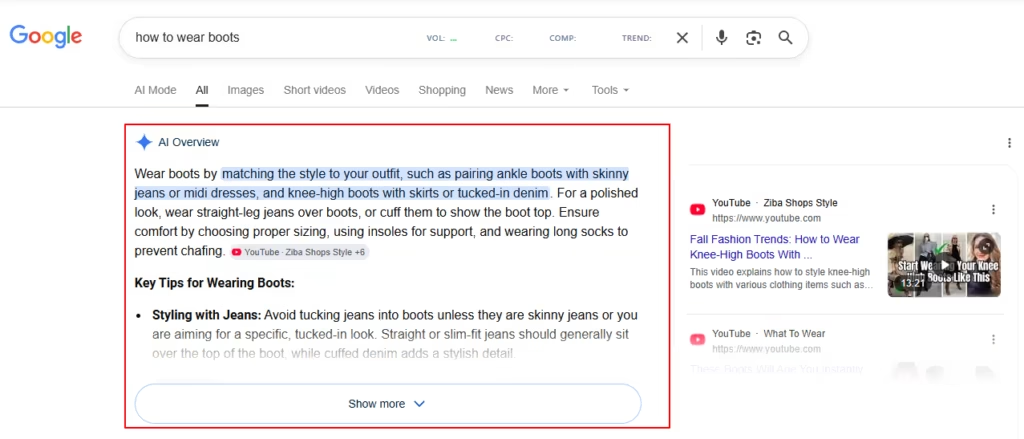
This has cut CTR for some informational queries but it’s also creating new opportunities. If your content gets cited inside an AI Overview, you can see 35% more organic clicks than a standard ranking. The key is creating structured, authoritative content that AI systems find citable.
Generative Engine Optimization (GEO) And AEO (Answer Engine Optimization)
A new discipline called GEO Generative Engine Optimization is emerging alongside traditional SEO. It focuses on making your content visible and citable within AI-powered search tools like ChatGPT, Perplexity, and Google’s AI Mode. The tactics overlap significantly with traditional SEO (clear structure, authoritative content, strong backlinks), but GEO also emphasizes: entity clarity, fact-backed claims with sources, FAQ-style formatting, and first-hand expertise signals.
From an AEO (Answer Engine Optimization) perspective, the goal is to structure content so it directly and clearly answers user questions in a way AI systems can easily extract and present.
Content Quality Over Volume
The era of publishing thin content at scale is definitively over. Google’s helpful content updates have consistently rewarded depth, first-hand experience, and genuine usefulness while penalizing AI-generated content that lacks original insight. I’ve seen sites lose 70%+ of their traffic after publishing mass-produced content. Fewer, better articles consistently outperform high-volume, low-quality strategies.
E-E-A-T as a Core Differentiator
Experience, Expertise, Authoritativeness, and Trustworthiness have become the most reliable long-term differentiators in competitive niches. Demonstrating real first-hand experience through case studies, original data, personal examples, and subject matter expertise is the highest-leverage E-E-A-T signal you can add to your content.
Frequently Asked Questions About SEO
How long does SEO take to show results?
In my experience, most new pages begin appearing in search results within 4-8 weeks, but achieving stable, competitive rankings typically takes 3-6 months for well-optimized content. Highly competitive keywords in established industries can take 6-18 months. The good news: SEO results compound. A page ranking well today can continue driving traffic for years with minimal additional investment.
Is SEO free?
Organic SEO does not require paying for each click, unlike PPC advertising. However, it does require investment in time, skilled content creation, technical optimization, and potentially SEO tools or professional services. The median monthly spend on SEO services among businesses ranges from $500 to $5,000, with enterprise programs often exceeding $10,000 per month.
Can I do SEO myself, or do I need to hire an expert?
Many fundamental SEO tasks keyword research, on-page optimization, content creation, and basic technical fixes are learnable and doable without specialist expertise. Free tools like Google Search Console, Google Analytics, and Google’s own documentation are excellent starting points. However, for competitive industries, complex technical issues, or faster growth timelines, working with experienced SEO professionals typically delivers significantly better ROI(Return on Investment).
What is the difference between white hat and black hat SEO?
White hat SEO refers to ethical strategies that align with search engine guidelines creating genuinely useful content, earning legitimate backlinks, and improving user experience. Black hat SEO involves manipulative tactics like buying links, keyword stuffing, cloaking, and content scraping. Black hat tactics may produce short-term gains but typically result in severe penalties including complete removal from Google’s index. I’ve seen businesses take years to recover from algorithmic penalties caused by shortcuts. It’s never worth it.
Does social media help SEO?
Social media signals are not direct ranking factors in Google’s algorithm. However, a strong social media presence indirectly supports SEO by amplifying your content’s reach, increasing brand searches (a positive behavioral signal), and creating opportunities for other websites to discover and link to your content. Think of social and SEO as complementary channels, not competing ones.
How does Google decide which page to rank #1?
Google’s ranking algorithm weighs over 200 factors simultaneously, but the core question it’s always asking is: “Which of these pages most accurately and helpfully answers this user’s query?” The pages that win typically have the strongest combination of relevant content, authoritative backlinks, excellent user experience, and clear E-E-A-T signals.
Conclusion: Your SEO Journey Starts Here
SEO is not a magic trick, a one-time fix, or a shortcut to overnight success. It’s a long-term strategy built on understanding how search engines work, what your audience is looking for, and how to create content that genuinely serves both. After two decades in this space, I’ve watched SEO evolve from keyword stuffing and link farms to the sophisticated, intent-driven discipline it is today and the businesses that treat it seriously continue to build some of the most sustainable competitive advantages online.
The fundamentals I’ve covered in this guide technical health, quality content, backlink authority, and user experience have remained consistent through every algorithm update Google has ever released. Master these, and you’ll be well positioned regardless of how the landscape continues to evolve.