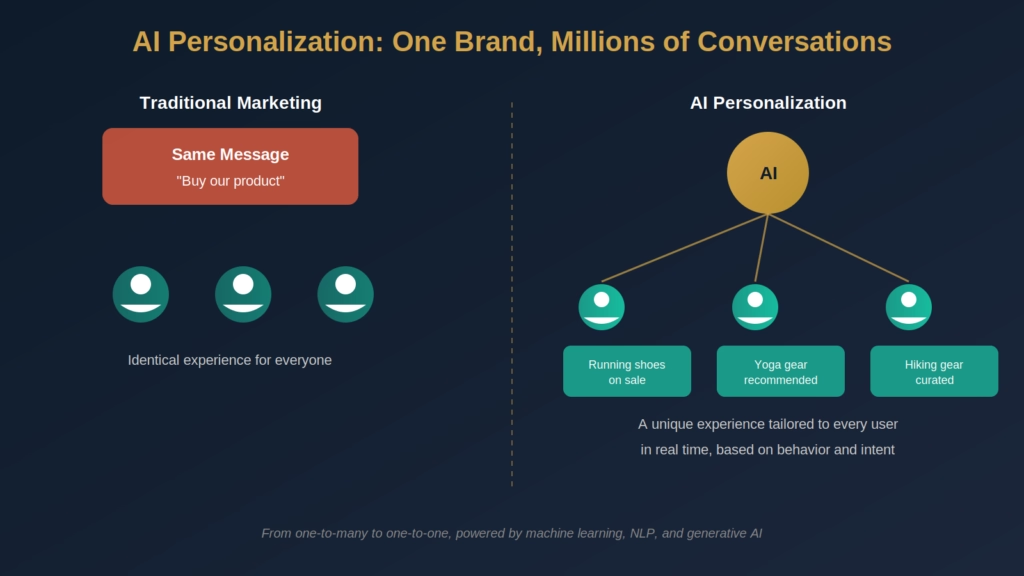
Figure 1. Traditional marketing pushes one message to everyone. AI personalization reshapes the experience for each user in real time.
What Is AI Personalization?
AI personalization is the use of artificial intelligence, typically a mix of machine learning, natural language processing, and generative AI, to tailor messaging, recommendations, pricing, and full experiences to individual users based on their behavior, preferences, and context.
The shift from older personalization is meaningful. Rule based personalization works on fixed logic: if someone is a returning customer, show them coupon X. AI personalization works on patterns: the system learns from millions of interactions which combinations of signals predict which response, then adapts in real time as new data comes in. The model gets better as it sees more behavior, which static rules cannot do.
AI personalization is delivered through some combination of machine learning, NLP(natural language processing), and generative AI, working on customer behavior data, preferences, interactions, and contextual signals like location, device, and time of day.
A simple example: when you open Netflix, the cover art on a movie may differ from what your friend sees. The film is identical, but Netflix has learned which thumbnail makes you, specifically, more likely to click. That is AI personalization at the smallest unit, the image, multiplied across every shelf, every recommendation, and every email.
Personalization vs. hyper personalization
These two terms are used interchangeably in many articles, but they are not the same. Standard personalization typically segments users into groups and delivers content based on those segments.
Hyper personalization uses real time data and AI to deliver experiences tailored to the individual, not the segment. Hyper personalization is what most modern AI personalization platforms now deliver out of the box.
Benefits of AI Personalization
AI personalization is not a soft branding play. The numbers across multiple research bodies between 2021 and 2025 are consistent: when done well, it lifts revenue, conversion rates, and retention while lowering acquisition costs.
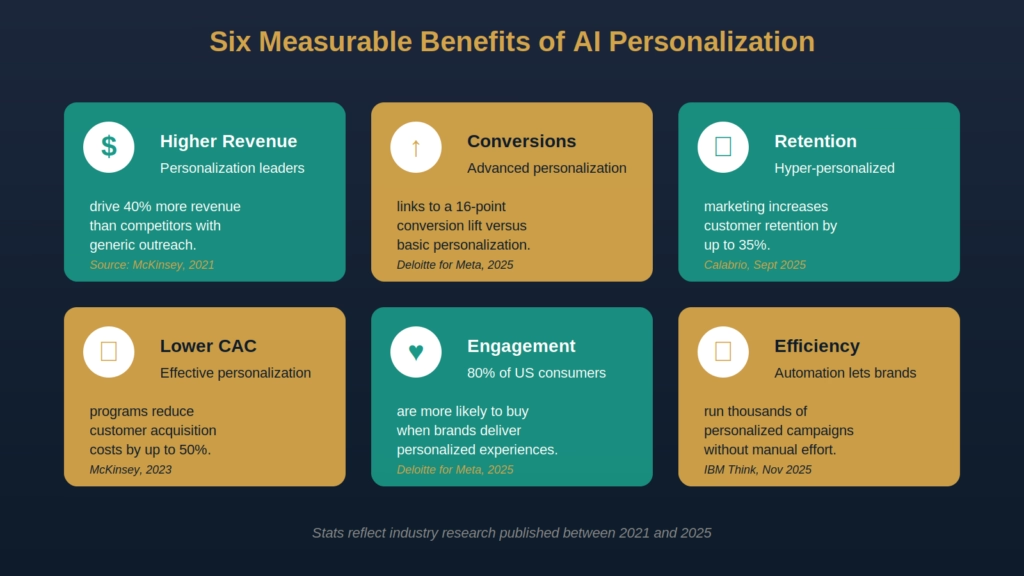
Figure 2. Six benefits of AI personalization, with sources and dates labeled per claim.
1. Higher revenue
Companies using advanced personalization drive about 40% more revenue than competitors using a generic approach, per McKinsey research published in November 2021. The gap has likely widened since the rise of generative AI in 2023 to 2024, but the McKinsey number remains the most cited benchmark.
2. Better conversion rates
A Deloitte study commissioned by Meta and published in August 2025 found that brands using advanced personalization see a 16 percentage point lift in conversions compared with brands using basic personalization. The same study reported that 80% of US consumers say they are more likely to purchase from brands that personalize their experience.
3. Stronger retention
Hyper personalized marketing has been linked to retention increases of up to 35%, per Calabrio research published in September 2025. Retention compounds revenue: keeping a customer is consistently cheaper than acquiring a new one.
4. Lower acquisition costs
McKinsey research from 2023 reported that effective personalization programs reduce customer acquisition costs by as much as 50%. The mechanism is simple: when ads and landing experiences are relevant, click through and conversion rates rise, and the cost per qualified lead drops.
5. Higher engagement
Personalized content keeps users engaged longer because it surfaces what they are most likely to need. This shows up in time on site, return visits, and email open rates, all metrics that feed back into the personalization model and improve future recommendations.
6. Operational efficiency
Automation lets brands run thousands of personalized variants simultaneously without manual setup. This frees marketing teams to spend more time on creative strategy and less time on production.
How AI Personalization Works
Under the hood, AI personalization runs on a four stage pipeline: collect data, analyze and segment, decide what to show, and deliver while continuously learning from the result.
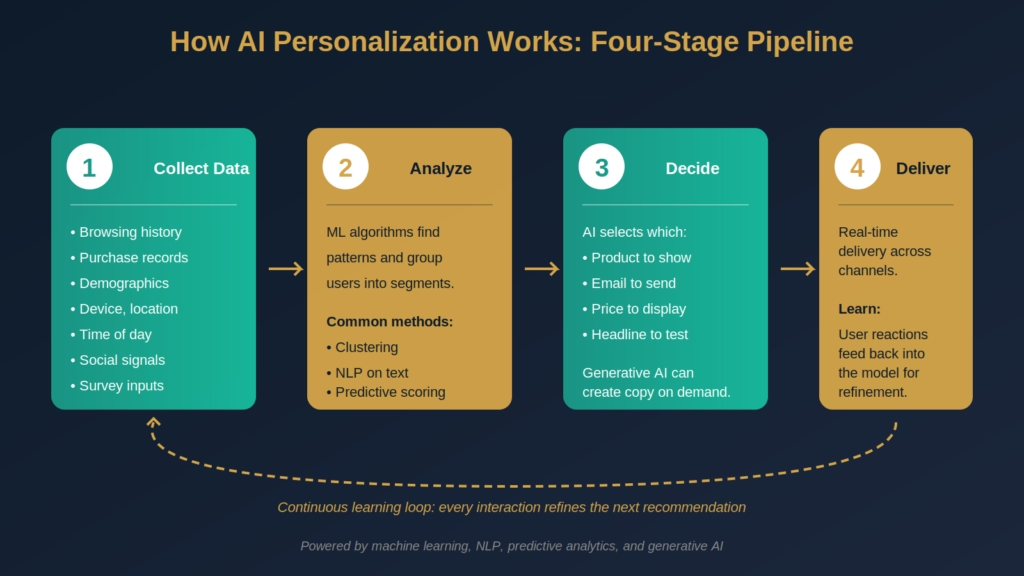
Figure 3. The four stage AI personalization pipeline. The feedback loop is what separates AI from older rule based personalization.
Stage 1: Data collection
The AI ingests data from many sources: browsing history, purchase history, demographics, social signals, device and location, time of day, survey responses, and any zero party data the user explicitly shares. Most modern platforms unify this in a Customer Data Platform (CDP). Per analysis published by aidigital.com in April 2026, around 80% of enterprises were projected to have adopted a CDP by 2026 as the foundation layer for personalization.
Stage 2: Analyze and segment
Machine learning algorithms find patterns in the data and group users into segments. Common methods include clustering, predictive scoring (for example, propensity to convert), and natural language processing on text inputs. In hyper personalization, segments shrink toward a segment of one, where the model treats each user as their own micro segment.
Stage 3: Decide
The AI selects the next best action: which product to recommend, which subject line to send, which price to display, which homepage variant to show, which ad creative to serve. Generative AI extends this by creating new copy or imagery on demand instead of choosing from a pre built library.
Stage 4: Deliver and learn
The chosen experience is delivered across channels, web, email, app, ads, SMS, and the user reaction (click, ignore, scroll, purchase) feeds back into the model. This loop is what separates AI personalization from static rules. The model improves with every interaction.
AI Personalization Applications
AI personalization shows up across industries. Six common application categories that map cleanly to most marketers’ day to day work.
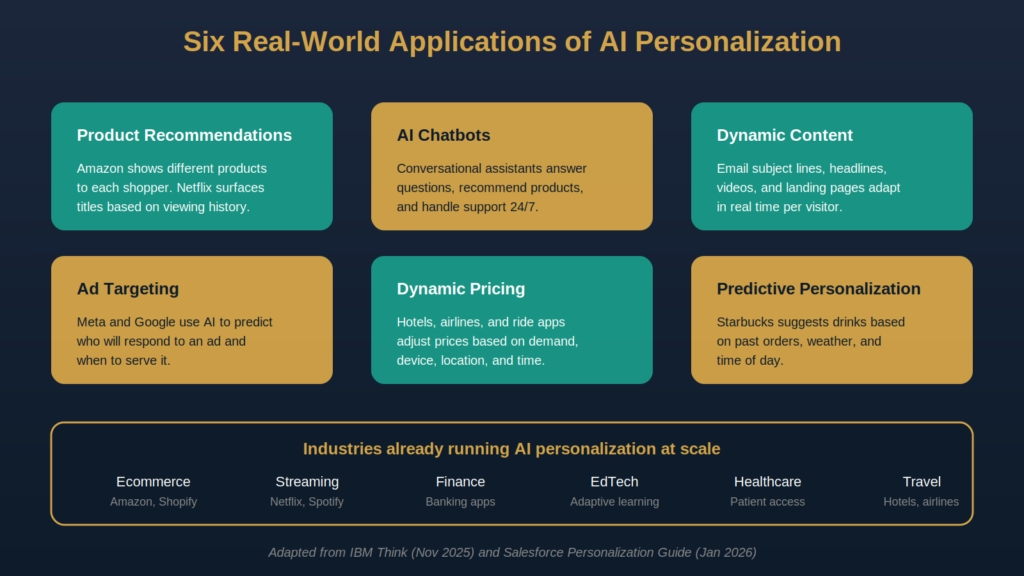
Figure 4. The six most common AI personalization applications, with industries that have already deployed them at scale.
Personalized product recommendations
The most visible application. Amazon, Netflix, Spotify, and most ecommerce platforms run recommendation engines that analyze purchase and browsing history to surface what each user is most likely to want next. Recommendations get more accurate as the user interacts with more items, which is why a new Netflix account feels generic for the first week and increasingly tailored over the following month.
AI powered chatbots
Chatbots built on large language models handle support, qualify leads, recommend products, and answer questions in natural language. Modern chatbots adjust their tone and depth based on past interactions and can hand off to a human agent when the question exceeds their confidence threshold.
Intelligent content
Email subject lines, headlines, hero images, and entire landing pages adapt per visitor. Generative AI extends this further: instead of choosing from a pre set library of variants, the system writes new copy in real time matched to the user’s segment or known preferences.
Ad targeting
Meta and Google Ads have used AI for audience targeting for years, but in 2025 to 2026 the systems became aggressively self optimizing. Smart Bidding, Advantage+ campaigns, and lookalike audiences all rely on AI to predict which user is most likely to respond. Note that the exact mechanics inside Meta and Google’s ad systems are proprietary and change frequently; what is publicly documented is that the systems use a mix of behavioral, contextual, and conversion signals to score users in real time.
Dynamic pricing
Hotels, airlines, and ride sharing apps adjust prices based on demand, time, location, and sometimes user signals. Ecommerce has been more cautious here because perceived unfairness can damage trust, but dynamic pricing is widely used for promotions, bundle offers, and personalized discounts.
Predictive personalization
The system anticipates needs before the user expresses them. Starbucks built one of the most cited examples: its app uses machine learning to suggest drinks based on past orders, time of day, weather, and location, integrating predictions back into inventory management. The user experiences relevance; the chain experiences fewer stockouts.
Emerging Trends in AI Personalization (2026)
Four shifts are dominating AI personalization conversations across marketing publications in late 2025 and early 2026: hyper personalization moving from concept to baseline expectation, generative AI changing what gets created rather than just chosen, agentic AI taking over execution, and a privacy first reset that changes which data brands can rely on.
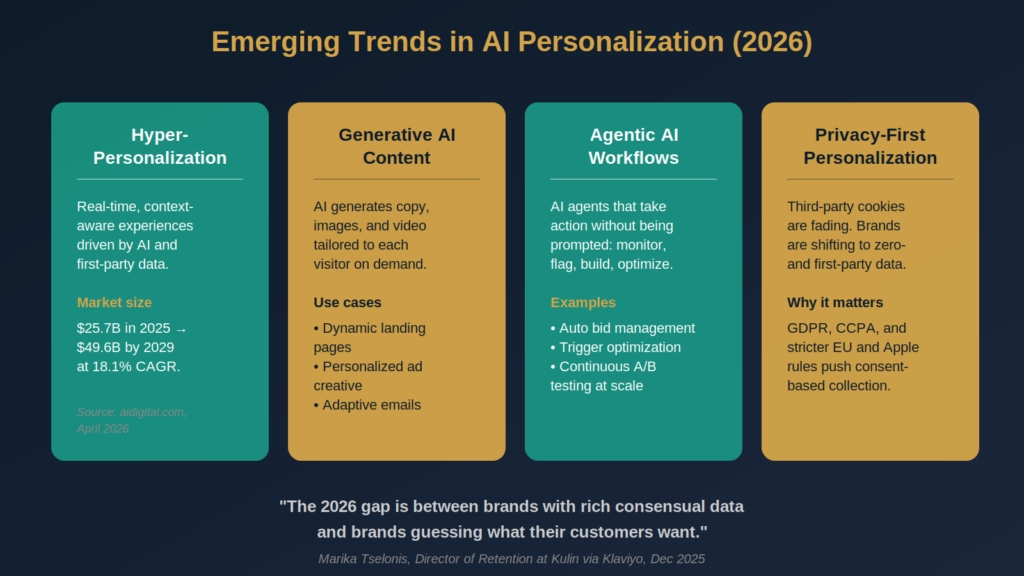
Figure 5. The four trends shaping AI personalization heading into and through 2026.
Hyper personalization is now baseline
What was advanced in 2022 is the new floor in 2026. Per industry analysis published by aidigital.com in April 2026, the global hyper personalization market was projected to grow from approximately $25.7 billion in 2025 to nearly $49.6 billion by 2029, a compound annual growth rate of about 18.1%. Brands not delivering real time, context aware experiences are starting to see measurable disengagement.
Generative AI changes the creative supply chain
Until recently, personalization meant choosing from a fixed pool of pre built creative assets. Generative AI flips that. Now the system creates copy, images, and even short video tailored to the individual user at request time. This is what platforms like HubSpot Breeze (cited in Ahrefs coverage from December 2025) use to build hyper personalized landing pages, social posts, and case studies on demand.
Agentic AI takes over execution
Agentic AI describes systems that take action without being prompted: monitor performance, flag issues, build assets, run optimizations. Klaviyo’s December 2025 marketing automation trends report highlighted agentic workflows where AI recommends triggers, delays, and messaging angles after spotting trends in retention data. The marketer becomes a strategist and reviewer; the AI handles the operational layer.
Privacy first personalization
Third party cookies are fading. Stricter EU privacy rules and Apple’s tracking restrictions have pushed brands toward zero party (data the user explicitly provides) and first party (data collected from the brand’s own properties) sources. As Marika Tselonis put it in Klaviyo’s December 2025 trends report, the gap in 2026 is not between brands using AI and brands not using AI; it is between brands with rich consensual data and brands guessing at what their customers want.
AI Personalization in Marketing
For performance marketers and growth teams, AI personalization shows up at every stage of the funnel. The most direct payoff is in the channels marketers control most tightly: paid ads, email, website experience, and conversational AI.
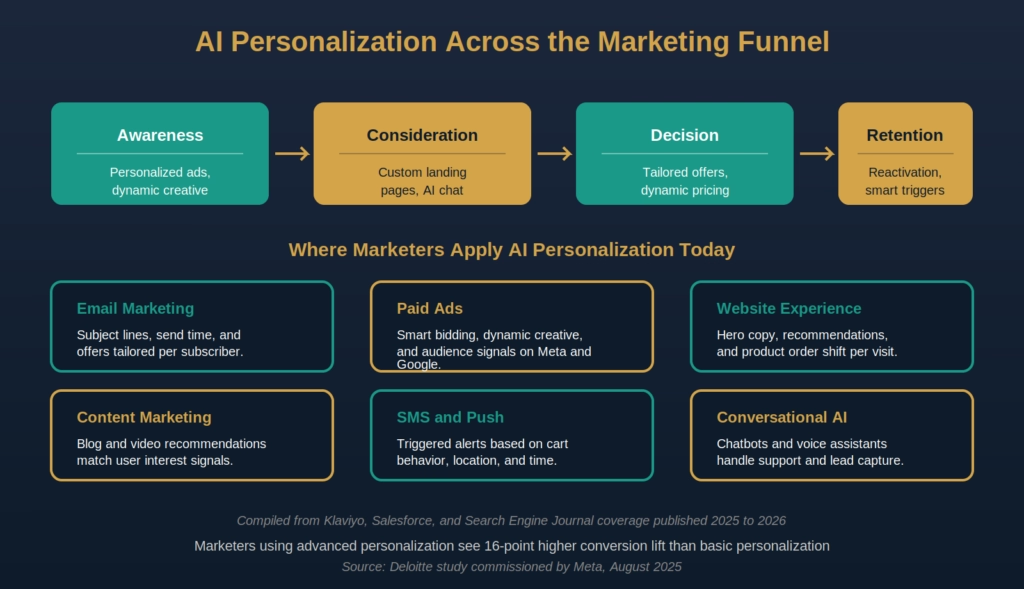
Figure 6. Where AI personalization shows up across the marketing funnel and the six tactical channels where most marketers apply it today.
Paid ads
Meta and Google have been steering advertisers toward AI driven products: Meta Advantage+, Google Performance Max, Demand Gen, and Smart Bidding. These systems use AI to choose audiences, placements, and creative combinations the marketer would not manually pick. As of early 2026, the exact mechanics inside these systems are proprietary and changing frequently. What is publicly documented: they use real time conversion signals, behavioral data, and creative testing to optimize automatically. Performance marketers who give the system clean conversion data and high quality creative inputs typically outperform those who try to fight the AI with manual controls.
Email and SMS
Klaviyo, HubSpot, Braze, and Salesforce Marketing Cloud all now use AI for subject lines, send time optimization, content selection, and trigger timing. The biggest 2026 unlock is generative copy that adapts per subscriber rather than per segment, which materially raises engagement on lifecycle flows.
Website experience
Tools like Mutiny, Dynamic Yield, Optimizely, and Adobe Target adapt headlines, hero images, recommendations, and CTAs based on visitor signals: traffic source, geography, returning vs. new, account level data from a connected CRM. A B2B visitor from a target account can see entirely different copy than a generic visitor on the same URL.
Content and SEO
On the SEO and content side, AI personalization affects what users see in search results and AI Overviews. Per Search Engine Journal (January 2026), no two users see the same Google results, and no two users get identical outputs from AI platforms. For marketers, this means optimizing for entities and topical authority matters more than exact keyword matches, because the surface itself is now adaptive.
Conversational AI
Chatbots have moved from clunky pop ups to genuine revenue drivers. Per Gartner cited data referenced in industry coverage from January 2026, modern chatbots handle a large share of routine queries without human escalation while collecting first party signals that feed back into the personalization stack.
Personalization vs. hyper personalization at a glance
| Aspect | Standard Personalization | Hyper Personalization |
|---|---|---|
| Data used | Demographics, basic behavior, purchase history | Real time behavior, context, intent, predictive signals |
| Targeting unit | Segments and cohorts | Individual user (segment of one) |
| Update frequency | Batch, daily or weekly | Real time, per session |
| Content source | Pre built library of variants | Generative AI creates on demand |
| Typical lift | Modest, 5 to 15% over generic | 16 point conversion lift over basic, per Deloitte 2025 |
Best Practices for AI Personalization
Most failed AI personalization initiatives fail for the same reasons: messy data, missing consent, no clear use case, no feedback loop, and no human review on creative. The seven practices below, Klaviyo’s December 2025 trends report, and McKinsey personalization research.
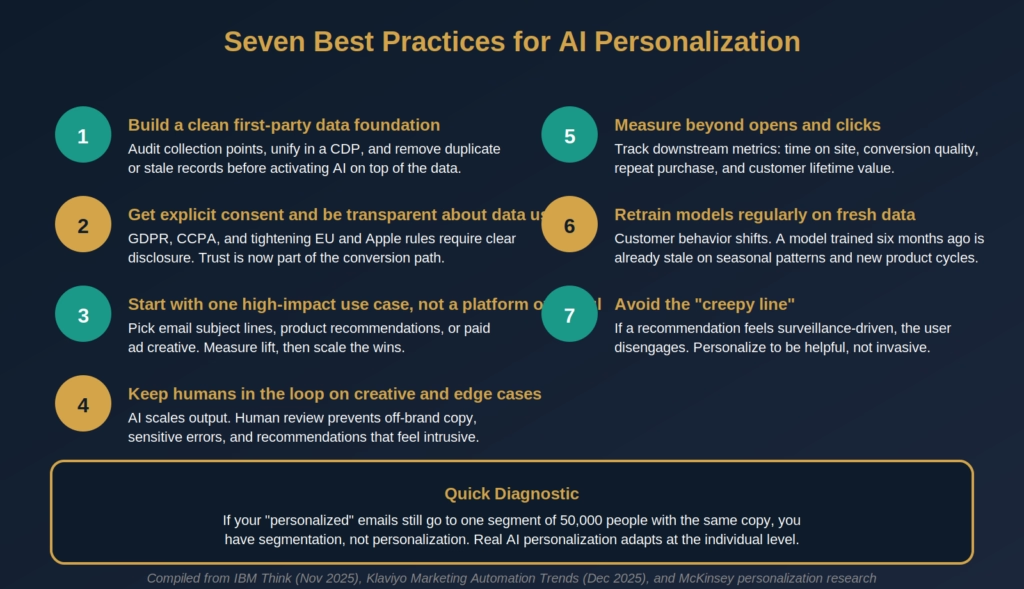
Figure 7. Seven best practices for AI personalization that consistently appear across major industry research.
1. Build a clean first party data foundation
AI is only as good as the data feeding it. Audit collection points (most brands have one or two when they should have five to seven across the customer lifecycle, per Klaviyo’s December 2025 trends report), unify the data in a CDP, and remove duplicate or stale records before activating any model.
2. Get explicit consent and be transparent about data use
GDPR, CCPA, and tightening EU and Apple privacy rules require clear disclosure of what data is collected and how it is used. Trust is part of the conversion path now, not a compliance afterthought. Brands that nail consent collection through value exchanges (early access, discounts, preference centers) build stronger first party data than brands that rely on invisible tracking.
3. Start with one high impact use case
Resist the urge to personalize everything at once. Pick one use case with clear measurement, email subject lines, product recommendations, paid ad creative, or homepage hero copy, and prove the lift. Scale wins; do not boil the ocean.
4. Keep humans in the loop on creative and edge cases
AI scales output. Human review prevents off brand copy, sensitive errors, and recommendations that feel intrusive. As one Klaviyo cited expert put it: the tech moves fast, but someone still needs to catch what should not ship.
5. Measure beyond opens and clicks
Vanity metrics flatter the report and hide weak performance. Track downstream metrics: time on site, conversion quality (not volume), repeat purchase rate, customer lifetime value. A campaign with high opens and low downstream conversion is signaling that the personalization is hooking the wrong promises.
6. Retrain models regularly on fresh data
Customer behavior shifts seasonally, with new product releases, and with broader cultural change. A model trained six months ago is already stale on these patterns. Set a retraining cadence (weekly to quarterly depending on volume) and audit model drift.
7. Avoid the “creepy line”
There is a sharp difference between helpful relevance and surveillance feeling targeting. If a recommendation makes the user pause and wonder how the brand knew that, the personalization has crossed a line. Brands earn trust by being useful, not omniscient. Test edge cases internally before shipping.
How AI Personalizes Answers: Why Two Users Get Different Results
This is the section most articles skip, but it is increasingly important for marketers because AI assistants like ChatGPT, Gemini, Claude, and Perplexity are now part of the customer research path. Two users asking the exact same prompt rarely get the same answer. There are three forces at play, and understanding them changes how marketers think about visibility in AI search.
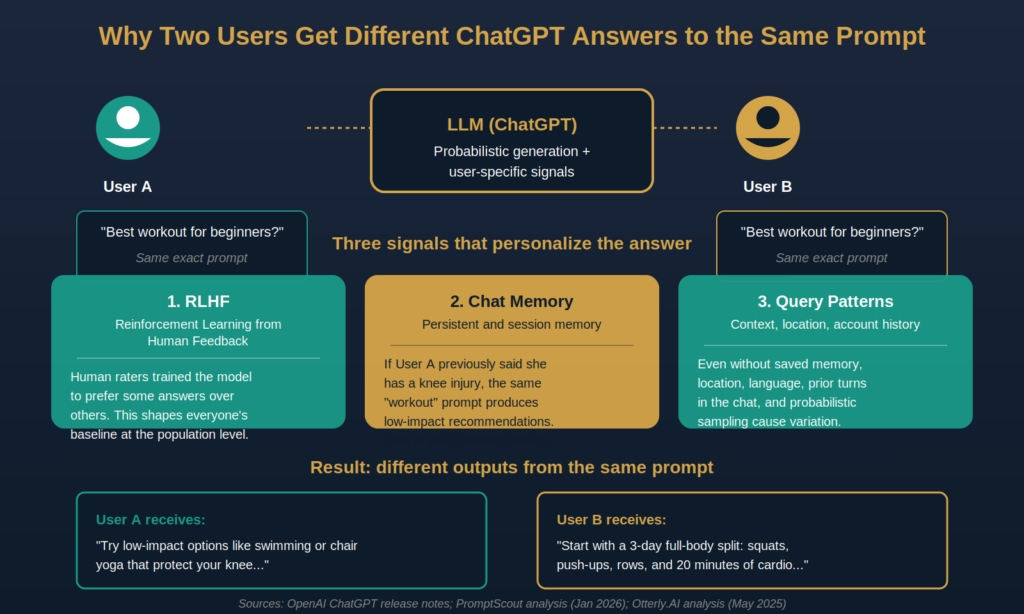
Figure 8. The same prompt produces different answers because three forces are personalizing the output: RLHF baseline, chat memory, and query pattern signals.
1. RLHF: how the model was trained to prefer certain answers
Reinforcement Learning from Human Feedback (RLHF) is the training process used to fine tune large language models. After the base model is trained on internet scale text, human raters rank model outputs from best to worst across many prompts. A reward model learns to predict those rankings, then the base model is fine tuned to produce answers the reward model scores highly.
RLHF does not personalize per user. It shapes the population level baseline: the tone, structure, and content the model gravitates toward by default. This is why ChatGPT, Claude, and Gemini sound different from each other even on identical prompts: each was trained with different rater pools, different rating guidelines, and different reward models.
There is also a probabilistic layer: LLMs sample from a distribution of possible next tokens at each step, so even with identical inputs and identical user context, the same prompt asked twice can produce slightly different wording. Per PromptScout analysis from January 2026, near deterministic behavior is only possible by pinning a specific model version and using strict, low temperature settings, typically through APIs.
2. Chat memory: persistent and session context
Modern AI assistants remember things. ChatGPT, Gemini, and Claude all support persistent memory features that store user preferences, past stated facts, and ongoing context across sessions. Per OpenAI’s released documentation on memory features, ChatGPT can recall information from previous chats with the same user and use it to personalize current responses.
A practical example: if User A previously told ChatGPT she has a knee injury, the prompt “best workout for beginners” returns low impact recommendations. User B, with no such context, gets a standard beginner program. Same prompt, different inferred constraints, different answers.
Within a single session, conversation history acts as short term memory. Each prompt builds on the prior turns, so the third question in a conversation gets answered against the context of the first two even if the user does not repeat that context.
3. Query pattern recognition: context, location, account history
Beyond stored memory, AI assistants use signals about the request itself. Per Otterly.AI analysis from May 2025, ChatGPT considers user location for both web search context and inferred context (a user who mentioned being in Germany in a prior chat may get localized recommendations). Language, device, account level history, and the wording of the prompt itself all shape the answer.
Slight rephrasing matters. Per OpenAI’s original ChatGPT release notes (November 2022), the model is sensitive to prompt phrasing, and the same question worded differently can produce different responses. This was acknowledged from launch and remains true.
What this means for marketers
Brand visibility in AI assistants is not about ranking for a keyword. It is about being entity recognized across the topics where buyers ask questions, in language patterns that match how real users prompt, and with content that earns citations across the diverse contexts AI surfaces. Tools like Semrush’s AI Visibility Toolkit and Ahrefs’ Brand Radar are now tracking brand mentions across ChatGPT, Gemini, Perplexity, and Copilot specifically because the surface is no longer one ranked list. It is millions of personalized conversations, each shaped by RLHF, memory, and query context.
Frequently Asked Questions
What is the difference between AI personalization and hyper personalization?
Standard personalization typically segments users into groups and serves content per segment, often updated daily or weekly. Hyper personalization uses real time data and AI to deliver experiences tailored to the individual user as they interact, with content that can be generated on demand. Hyper personalization is the modern default for most AI personalization platforms.
How is AI personalization different from older rule based personalization?
Rule based systems run on fixed if then logic written by humans: if returning customer, show coupon X. AI personalization learns patterns from data and adapts as new behavior comes in, without anyone hand coding new rules. The model gets better as it sees more interactions, which static rules cannot.
Does AI personalization work for small businesses, or only enterprise brands?
It works at both ends, with different tools. Enterprise brands run platforms like Salesforce, Adobe Experience Cloud, and Dynamic Yield. Small businesses get most of the same benefits through Klaviyo, HubSpot, Shopify’s built in personalization, Mutiny, and embedded AI in Meta and Google ad platforms. The data foundation matters more than the tool. A small brand with clean first party data often outperforms a large brand with messy data.
What are the biggest mistakes in AI personalization?
Five recurring failure modes: messy or duplicated data going into the model, no consent or transparency layer (causing trust issues and compliance risk), starting with too many use cases at once, no feedback loop to retrain on fresh behavior, and no human review on generated creative leading to off brand or inappropriate output.
Is AI personalization a privacy risk?
It can be implemented poorly. Brands that collect data without clear consent, share it with third parties, or use it in ways the user did not anticipate damage trust and risk regulatory penalties under GDPR, CCPA, and similar laws. Brands that use zero party (user volunteered) and first party (own property) data with clear disclosure tend to do well. The 2026 trend is firmly toward consent based personalization, not surveillance based.
How do I measure AI personalization performance?
Pair upstream engagement metrics (open rate, CTR, time on page) with downstream business metrics (conversion rate, average order value, repeat purchase, customer lifetime value, retention curve shape). A campaign that hooks attention but does not convert is signaling weak relevance under the surface metrics. The Deloitte 2025 study found a 16 point conversion lift for advanced over basic personalization, which is a useful benchmark to test your own program against.
Conclusion: AI Personalization Is the Floor, Not the Ceiling
In 2026, AI personalization stopped being a competitive advantage and became a baseline expectation. Customers compare every brand interaction to the most personalized experience they had that day, usually Netflix, Spotify, or Amazon. Brands not meeting that bar feel outdated regardless of product quality.
The work for marketers is not to chase the latest trend. It is to fix the foundation: clean first party data with consent, one or two well measured use cases, retraining cadence, human review on creative, and downstream metrics that actually map to revenue. The brands that get those right will benefit from every new generative and agentic capability that ships next. The brands that skip them will keep paying for tools that cannot perform on bad data.
Next steps for performance marketers: audit your current personalization stack, identify the one channel with the cleanest data and clearest measurement, and ship a tightly scoped AI personalization test there before scaling. Internal link: see related content on AI marketing strategy and AI search visibility.