What Is Google Dance?
Google Dance refers to temporary ranking fluctuations that occur when Google updates its search algorithm or re-indexes billions of web pages. During these update periods, which can last anywhere from a few days to several weeks, your website’s position in search results may shift dramatically and unpredictably before eventually stabilizing.
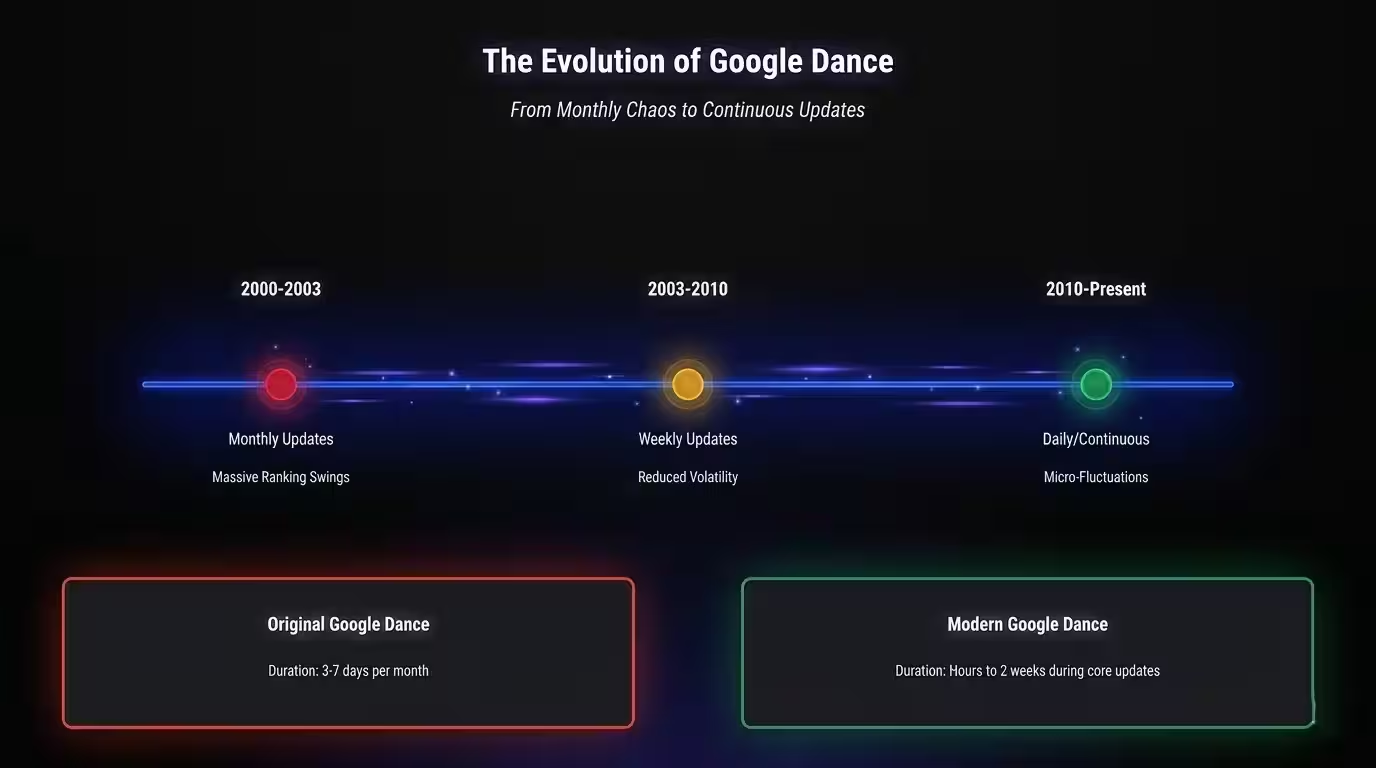
The term originated in the early 2000s when Google rolled out major index updates roughly once per month. These updates were named after cities where Google hosted its annual Search Engine Strategies conferences (hence the dancing metaphor). During each monthly refresh, rankings would swing wildly for 3 to 7 days as Google’s distributed data centers synchronized their indexes.
While the original monthly Google Dance phenomenon largely disappeared after 2003 when Google moved to continuous updating, the term has evolved. Today, SEO professionals use ‘Google Dance’ to describe the ranking volatility that occurs during any major algorithm update, particularly core updates that Google announces 3 to 7 times annually.
The Original Google Dance: A Historical Perspective
To understand why Google Dance still matters in 2026, you need to appreciate how dramatically different Google’s infrastructure was in its early years.
Between 2000 and 2003, Google maintained separate data centers, each with its own index copy. When Google released a monthly update, different data centers would receive the new algorithm at different times. If you searched Google.com from New York, you might hit a data center with the old index. Refresh your browser, and you might connect to a different data center running the new algorithm, showing completely different results for the identical query.
This resulted in search results that literally danced between positions for days. Webmasters obsessively checked rankings multiple times per day, watching their sites hop between page one and page three seemingly at random.
According to historical data from the Internet Archive and early SEO documentation, ranking fluctuations during the original Google Dance could span 20 to 30 positions for competitive keywords. A site ranking #5 on Monday might drop to #35 by Wednesday, then resurface at #8 by Friday.
Modern Google Dance: Core Updates and Continuous Refinement
Google officially ended the monthly dance cycle in 2003, transitioning to what they call ‘everflux’: continuous, incremental updates happening multiple times per day. The company now processes algorithm changes so frequently that ranking shifts became less dramatic and more gradual.
However, the dance never truly stopped. It simply changed rhythm.
Since 2018, Google has announced broad core updates several times per year. These updates take 1 to 2 weeks to fully roll out across all data centers and affect how Google evaluates content quality, relevance, and authority across its entire index. During these rollout periods, rankings fluctuate significantly, which the SEO community has reclaimed the term ‘Google Dance’ to describe.
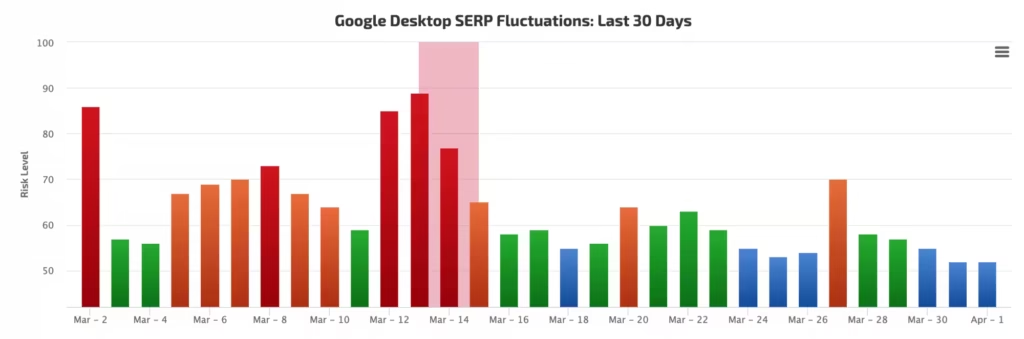
According to data from March 2025, the most recent core update began rolling out on March 13, 2025, and took approximately two weeks to complete. During this period, SEO tracking tools like SEMrush, Ahrefs, and Moz recorded volatility scores 3 to 5 times higher than baseline levels.
Why Does Google Dance Happen?
Google Dance isn’t random chaos. It’s the visible symptom of Google’s search infrastructure processing massive changes. Here’s what causes modern ranking volatility:
Algorithm Updates and Recalibration
When Google releases a core update, it’s essentially changing the scoring criteria for billions of web pages. The algorithm now weighs ranking factors differently: perhaps giving more importance to first-hand experience signals, adjusting how it evaluates backlink quality, or refining how it interprets user engagement metrics.
As Google’s systems re-evaluate every indexed page against these new criteria, rankings shift. Pages that previously ranked well under the old scoring system may drop if they don’t meet the new quality bar. Pages that were previously undervalued may rise.
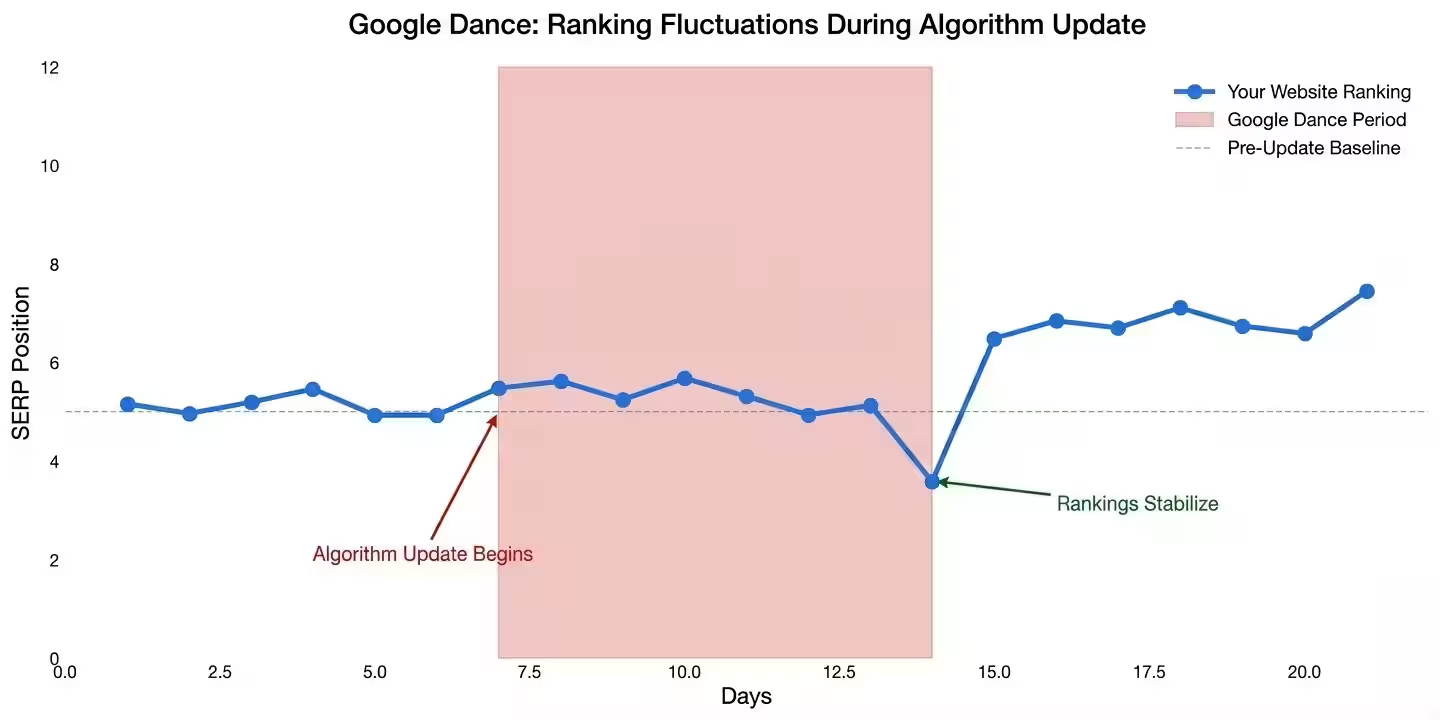
This recalibration doesn’t happen instantly. Google processes billions of URLs, recalculates relevance scores, and redistributes ranking positions gradually over the rollout period. During this window, your rankings fluctuate as the system tests different configurations before settling on final positions.
Index Updates and Crawl Refreshes
Beyond algorithm changes, Google constantly crawls and re-indexes web pages. When Google refreshes its index of your site, it may discover new content, notice removed pages, detect technical issues, or observe changes in your link profile.
These index refreshes can trigger temporary ranking shifts as Google re-evaluates your site’s overall quality, topical authority, and freshness signals. If Google discovers 50 new high-quality pages on your site, it might temporarily boost your domain authority before settling into a more calibrated position.
Data Center Synchronization Delays
While Google no longer operates the dramatically out-of-sync data centers of the early 2000s, minor synchronization delays still occur. Google runs thousands of servers distributed globally across multiple data centers. During major updates, different server clusters may implement changes at slightly different times, causing regional or temporary ranking variations.
The Real Impact of Google Dance on Your Website
Google Dance affects different sites differently. Understanding your risk profile helps you prepare appropriate response strategies.
New Websites and Young Domains
If you’ve launched a website within the past 6 to 12 months, expect higher volatility during core updates. Google scrutinizes new sites more heavily as part of its quality vetting process. Your rankings may swing wildly during the dance period as Google gathers more data about your content quality, user engagement, and trustworthiness signals.
I’ve observed new sites experience ranking swings of 15 to 40 positions during their first few core updates. This doesn’t indicate poor quality; it’s Google’s way of testing where your content belongs in its quality hierarchy.
Traffic and Revenue Fluctuations
Rankings drive traffic, and traffic drives revenue. During Google Dance periods, you may see:
- Daily traffic swings of 20% to 50% during peak volatility
- Conversion rate changes as different user segments find your pages
- Temporary drops in revenue for ecommerce or lead generation sites
- Shifts in keyword portfolio performance as different queries rank differently
According to case study data from Search Engine Land (December 2025), one ecommerce site experienced a 42% traffic decline in the first week of the August 2024 core update, followed by a gradual 65% recovery over the subsequent six weeks as rankings stabilized.
Long-Term SEO Strategy Implications
While individual dance events are temporary, they reveal important strategic insights. If your rankings consistently drop during updates before partially recovering, it signals underlying quality issues that Google’s algorithm is detecting but not yet fully penalizing.
These early warning signals give you opportunities to strengthen your technical SEO foundation, improve content depth and expertise signals, and build higher-quality backlinks before more severe ranking losses occur.
How to Respond to Google Dance: A Strategic Framework
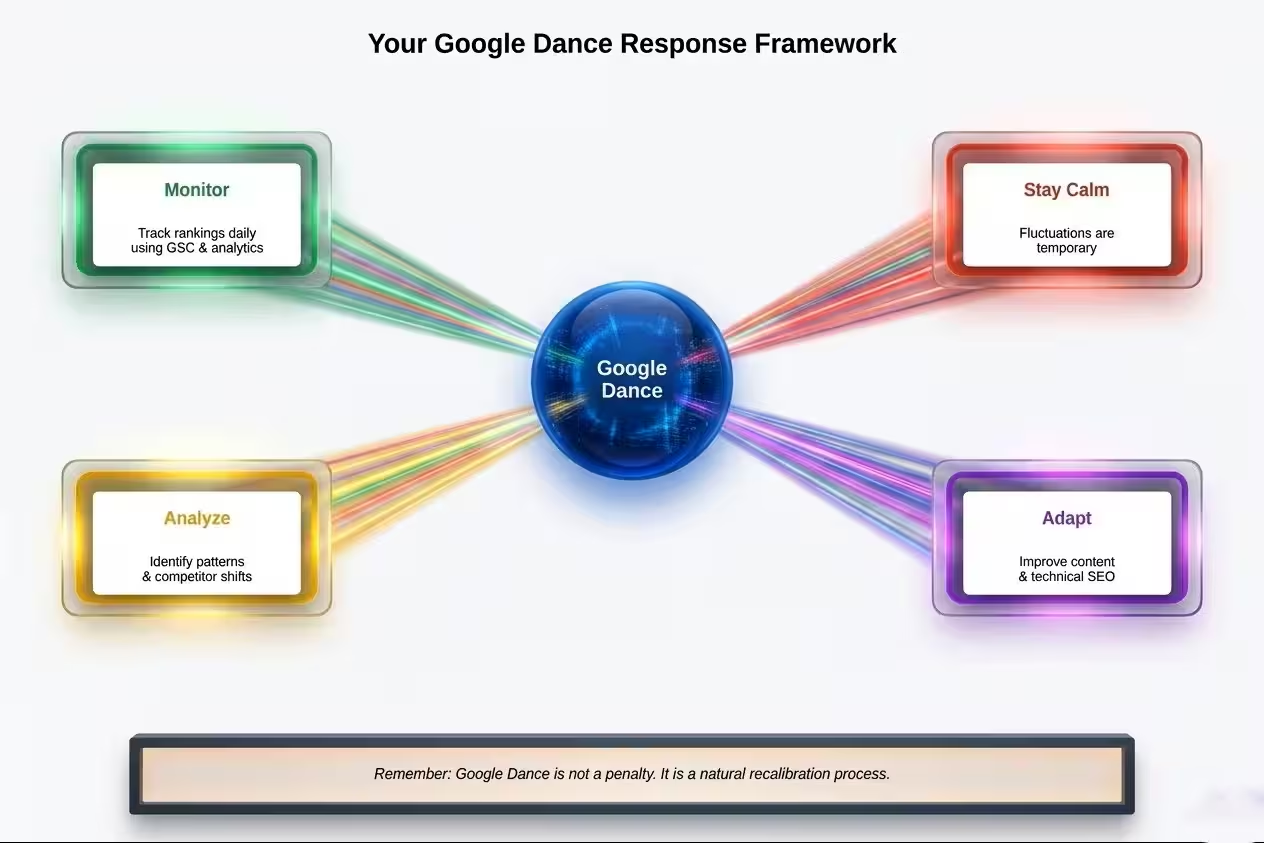
The worst thing you can do during Google Dance is panic. The second worst thing is to do nothing. Here’s how I approach ranking volatility with clients:
Step 1: Monitor Without Overreacting
Use Google Search Console, Google Analytics, and third-party rank tracking tools (SEMrush, Ahrefs, Moz) to monitor your rankings daily during update periods. However, avoid making major site changes based on single-day fluctuations.
I set up automated tracking for my 20 most valuable keywords and review weekly trend reports rather than obsessing over hourly rank checks. This prevents reactive decision-making based on temporary swings.
Step 2: Distinguish Temporary Dance from Permanent Loss
Google typically announces when core updates begin and when they finish rolling out. Check Google’s Search Status Dashboard and their official ranking release history page to confirm whether an update is in progress.
If you’re experiencing volatility during an announced update period, wait for Google to confirm completion (usually 10 to 16 days) before drawing conclusions. Rankings that drop during the dance often partially or fully recover after stabilization.
If rankings remain suppressed 3 to 4 weeks after an update completes, that indicates a genuine algorithmic penalty or quality issue requiring intervention.
Step 3: Analyze Competitor Movements
During Google Dance, don’t just watch your own rankings. Monitor the pages now outranking you. Ask:
- What content depth or format do they offer that you lack?
- Do they have stronger E-E-A-T signals (author bios, credentials, citations)?
- Are they covering more comprehensive topic clusters?
- Do they have significantly better technical performance (Core Web Vitals)?
These observations reveal what Google’s new algorithm values, giving you a roadmap for improvement.
Step 4: Make Strategic Improvements, Not Reactive Fixes
If you identify legitimate content gaps or quality deficiencies, address them methodically:
- Update outdated statistics and information with current 2026 data
- Add first-hand experience examples and case studies
- Improve internal linking to strengthen topical authority
- Enhance page speed and Core Web Vitals scores
- Build high-quality, editorial backlinks from authoritative sources
These improvements won’t reverse a current dance, but they position you for better performance in the next update cycle.
Google Dance in 2026: What Has Changed?
As of April 2026, several trends are reshaping how Google Dance manifests:
Increased Update Frequency
According to data from December 2024, Google confirmed seven core algorithm updates throughout 2024. However, industry predictions for 2025 and 2026 suggested an increase in update frequency, raising concerns for publishers already struggling to adapt.
More frequent updates mean less recovery time between dance periods. Sites that previously had 8 to 12 weeks to implement improvements between updates may now have only 6 to 8 weeks.
AI-Powered Evaluation Systems
Google increasingly uses AI models like MUM (Multitask Unified Model) to evaluate content quality and topical authority. These systems assess semantic context and expertise signals rather than simple keyword matching.
This shift means Google Dance now reflects changes in how AI interprets your content’s depth, accuracy, and authoritativeness. Pages ranking well under traditional SEO may experience volatility as AI-driven evaluation becomes more sophisticated.
AI Overviews and SERP Feature Volatility
According to case studies from August 2024, some sites experienced traffic declines not from traditional ranking drops but from displacement by AI Overviews and featured Reddit discussions taking SERP real estate.
This creates a new dimension of Google Dance where your organic position remains stable, but click-through rates plummet because AI-generated summaries answer queries directly in the SERP.
Essential Tools for Tracking Google Dance
You can’t manage what you don’t measure. Here are the tools I rely on for dance monitoring:
Google Search Console (Free)
Your primary source of truth. Monitor the Performance report for:
- Daily impressions and click trends
- Average position changes for top queries
- Page-level performance shifts
- New indexing or coverage issues that might trigger volatility
Rank Tracking Software
Tools like SEMrush, Ahrefs, Moz Pro, and SERanking provide:
- Automated daily ranking checks for target keywords
- Historical ranking data to identify dance patterns
- Volatility index scores showing market-wide turbulence
- Competitor tracking to see if declines are site-specific or industry-wide
Google Analytics 4
GA4 reveals the traffic and conversion impact of ranking changes:
- Organic traffic trends during dance periods
- Landing page performance changes
- User engagement metrics (bounce rate, session duration)
- Conversion rate fluctuations tied to ranking shifts
Common Myths and Misconceptions About Google Dance
Let me clear up some persistent misunderstandings I encounter regularly:
Myth 1: Google Dance Is a Penalty
False. Google Dance is not a penalty. It’s a natural recalibration process. If Google penalizes your site for spam, thin content, or manipulative practices, you’ll receive a manual action notice in Search Console. Dance fluctuations happen without warnings and affect even high-quality sites.
Myth 2: You Can Prevent Google Dance
No site is immune to algorithm updates. Even authoritative domains from major publishers experience ranking swings during core updates. What you can control is how quickly you recover and how severe the impact becomes through proactive quality improvements.
Myth 3: Rankings Stabilize Within Days
While Google may complete an update rollout within 2 weeks, rankings often continue adjusting for 4 to 6 weeks afterward as the algorithm fine-tunes its evaluations based on real user engagement data. Don’t expect immediate stability.
Myth 4: Making Quick Changes Speeds Recovery
Rushing to rewrite content, remove pages, or drastically alter site structure during active dance periods often backfires. Google needs time to re-crawl and re-evaluate changes. Hasty modifications may trigger additional volatility rather than accelerating recovery.
Frequently Asked Questions About Google Dance
How long does Google Dance typically last?
Modern Google Dance during core updates typically lasts 10 to 16 days during the official rollout period, with rankings continuing to fluctuate for an additional 2 to 4 weeks as the algorithm fine-tunes positions based on user engagement data. Total volatility periods usually span 4 to 6 weeks from update announcement to final stabilization.
Can Google Dance permanently damage my rankings?
No. Google Dance itself is temporary volatility, not permanent damage. However, if your site has underlying quality issues that the new algorithm detects (thin content, poor E-E-A-T signals, technical problems), you may experience lasting ranking declines that persist after the dance ends. The dance reveals problems; it doesn’t create them.
Should I pause SEO work during Google Dance periods?
Absolutely not. Continue creating high-quality content, building authoritative backlinks, and improving technical performance. These efforts won’t immediately reverse dance volatility, but they strengthen your foundation for better performance in future update cycles. SEO is a long-term marathon, not a sprint.
How do I know if ranking drops are Google Dance or a penalty?
Check Google’s Search Status Dashboard to confirm if a core update is actively rolling out. Monitor your Google Search Console for manual action notices. If drops occur during an announced update period and you have no manual actions, you’re experiencing dance volatility. If rankings plummet outside update windows and remain suppressed for 4+ weeks, investigate potential algorithmic penalties related to content quality or link profiles.
Does Google Dance affect all industries equally?
No. Your Money Your Life (YMYL) niches like healthcare, finance, legal, and news experience more severe volatility because Google applies stricter E-E-A-T evaluation criteria. Ecommerce and affiliate sites have been particularly impacted by updates from 2023 through 2025, with some niches seeing sustained 40% to 60% traffic declines.
Will Google Dance ever completely disappear?
Unlikely. As long as Google continues refining its algorithms to deliver better search results, ranking recalibrations will occur. The volatility may become more subtle as Google’s AI systems improve, but the fundamental dance of re-evaluation will persist. What may change is the speed of rollouts and the granularity of adjustments.
Final Thoughts: Embracing the Dance
After 5+ years in SEO, I’ve learned that Google Dance is not your enemy. It’s simply the visible manifestation of Google’s continuous quest to surface the most helpful, accurate, and authoritative content for searchers.
Yes, watching your carefully earned rankings bounce around feels frustrating. Yes, the traffic and revenue swings create stress. But the sites that thrive long-term are those that view each dance as feedback, not punishment.
When your rankings drop during an update, Google is telling you something about how the algorithm now evaluates quality. Listen to that feedback. Analyze what changed. Study the pages now outranking you. Identify the gaps in your content depth, expertise signals, or technical performance.
Then make strategic improvements, not reactive panic fixes.
The websites that recover strongest from Google Dance are those that focus on sustainable SEO fundamentals: creating genuinely helpful content based on first-hand experience, building natural editorial backlinks from authoritative sources, and maintaining excellent technical performance across core web vitals.
These practices don’t eliminate dance volatility. But they ensure that when the music stops and rankings stabilize, you’re standing in a stronger position than when the dance began.
Monitor your analytics. Stay informed about algorithm updates. Remain patient during volatility periods. And keep building the kind of authoritative, helpful content that serves your audience regardless of what Google’s algorithm does next week.
Because in the end, Google Dance is temporary. Quality content is permanent.